Can You Play Pickleball With a Torn Meniscus?
Pickleball is one of the fast growing sports in the United States, enjoyed by people of all ages. It combines elements of tennis, badminton and table tennis and can be played both indoors or outdoors. While generally considered a low impact sport, unfortunately, injuries do occur, especially to the knee joints due to its fast-paced nature. One common injury is a torn meniscus, which can be quite painful and debilitating. The question then arises: Can you play pickleball with a torn meniscus?
This article is general information, not medical advice. Whether you can play pickleball with a torn meniscus depends on the type and severity of the tear and on your doctor's advice. Some people with small tears keep playing with their doctor's guidance, but playing on a torn meniscus can cause further damage, so get it checked first.
In this article we summarize general information from sources such as orthopedic organizations to guide you through the process of playing or getting back into pickleball with a torn meniscus.
What is a Torn Meniscus?
A torn meniscus is a common knee injury that occurs when the c-shaped cartilage in the knee joint is torn. It's usually caused by twisting or overextending the knee joint.
It can be really painful and can lead to swelling, stiffness, and difficulty straightening or bending the knee. It can also cause a feeling of instability in the knee joint.
While you can have a minor, symptomless tear, the pain may resurface years later and can be triggered by something as simple as a sudden movement.
If you are a sports person experiencing a meniscus tear, you may notice pain and swelling around your knee. You can also experience a popping sensation during the injury and may have trouble bending and straightening the leg.
The pain may not be noticeable at first, and symptoms can become more obvious within the first day or so.
If you think you may have torn your meniscus, it's important to see a doctor as soon as possible. They'll be able to diagnose the injury and determine the best course of treatment.
Meniscus injuries differ in severity based on whether or not its a partial or full tear. Some small tears may settle with non-surgical care, but others may not heal on their own [1].
Surgery may be necessary to repair the torn cartilage in more serious cases. So don't wait to get it checked.
How Can Playing Pickleball Lead to a Torn Meniscus?
When playing pickleball, you may twist your knee or put too much strain on it, resulting in a torn meniscus. The sudden change of direction or quick stops can put extra pressure on the knee joint, making it susceptible to injury.
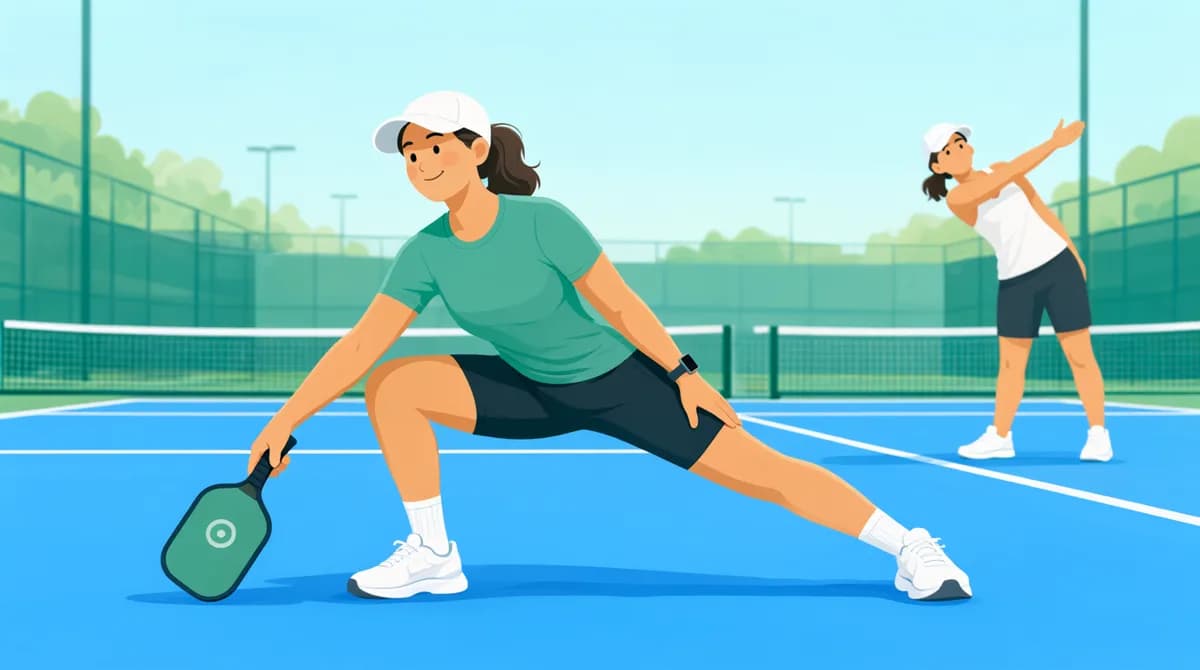
What's worse, you may not even realize it's happening until it's too late! So it's important to take time to warm up and stretch before a pickleball match, and to listen to your body if you start to feel pain or discomfort. That way, you can prevent a torn meniscus – and keep on playing!
Can You Play Pickleball With a Torn Meniscus?
Playing pickleball on a torn meniscus is not advised. It can cause pain and discomfort, and recovery time varies a lot from person to person, so don't assume that returning motion means the tear has healed.
This does depend on the severity of the injury. If you have a severe tear and the pain will not go away, you should stop playing and see a doctor, who will decide whether imaging or arthroscopy is appropriate.
Even if you are able to play with a partially torn meniscus, you risk further damage, and your knee might lock up. This occurs when you knee will not completely bend or completely straighten.
Why did my knee lock up playing pickleball?
If you have a torn meniscus and your knee locks up while playing pickleball, this means that your the torn part of the meniscus has displaced into a part of the knee where it doesn't belong or fit [2]. The knee may swell, make a popping sound, stiffen, and/or cause pain during standing, bending, or kneeling.
A locked knee needs prompt medical attention. Treatment options depend on the injury, and your doctor can explain them.
How is a Torn Meniscus Treated
Treating a torn meniscus usually depends on the severity of the injury. Generally, a torn meniscus is treated with rest, ice, compression, and elevation (RICE). Over-the-counter pain relievers such as NSAIDs may help with pain for some people, but ask your doctor or pharmacist whether they are safe for you. Physical therapy can help strengthen the muscles around the knee and improve range of motion.
In some cases, surgery may be needed to repair or remove the torn meniscus. Arthroscopic surgery is a minimally invasive procedure that can be used to repair or trim the meniscus. Rarely, a larger open procedure may be needed. Recovery time and rehabilitation can vary depending on the type of surgery and the severity of the injury.
It's important to take the time to understand your options and choose the best treatment plan for you. Have any questions? Don't hesitate to reach out to your doctor for more information!
Arthroscopic Surgery
Arthroscopy is a surgical procedure used to diagnose and treat joint problems[1][2][3]. It involves inserting a narrow tube attached to a fiber-optic camera into the joint[2].
The camera allows the surgeon to visualize the inside of the joint and perform treatments such as removing damaged tissue or repairing torn ligaments[4]. Recovery time varies depending on the type of procedure performed[3].
Can I play pickleball after meniscus surgery?
It depends on your individual recovery time and the advice of your doctor. Return timelines vary widely: recovery after trimming a torn meniscus is often faster than after a repair, which can take several months. Your surgeon will give you an individual timeline.
So it's best to check with your surgeon before you jump back in.
It's really important to get the green light from your doctor before you start any kind of physical activity post-surgery. That way you can be sure you're not doing anything that could hurt your healing process.
And if your doctor does give you the okay, then you can start slowly, gradually increasing the intensity of your play.
It's possible to get back to pickleball after meniscus surgery, but it's important to make sure it's safe for you first! You don't want to push yourself too hard and risk re-injury. So make sure to listen to your body and your doctor's advice.
How to Reduce Your Risk of a Torn Meniscus?
One of the best ways to reduce your risk of a torn meniscus is to stay active and take care of your joints. Regular exercise strengthens the muscles around your joints and may help protect them from injury. Try to mix up your routine to include a variety of activities such as swimming, biking, and yoga.
Don't forget to warm up and stretch before and after your workout. It's also important to keep your body weight in check, because excess pounds put extra stress on your joints.
It's also a good idea to pay attention to your form when you exercise. Make sure you're using proper technique and that your movements are controlled and slow. And if you feel any pain, stop and take a break. No one wants to get injured! Finally, if you have any pre-existing joint problems, make sure to get them checked out by a doctor before you start any new exercise program.
Sum it up
In short, playing pickleball with a torn meniscus is not advised without your doctor's approval, and a larger tear usually calls for rest and medical care. See a doctor promptly after a knee injury, and get clearance before you return to play.