Indoor Pickleball vs Outdoor Pickleball Play
Pickleball is an exciting game that's gaining popularity all over the world. It's a great way to stay active and have fun with friends. But when it comes to playing pickleball, there are two main options: indoor and outdoor.
Indoor pickleball is different from outdoor pickleball in a few ways. The court size is the same, but indoors you have to account for walls, low ceilings and often multi-sport floor lines. Outdoors, you'll need to adjust to the elements, like wind, sun and heat. Different balls are typically used for each setting. The biggest advantage of outdoor play is that you can enjoy the great outdoors while playing.
In the rest of this article we will cover everything you need to know about indoor and outdoor pickleball play. So read on!
Outdoor pickleball play

Outdoor pickleball is a great way to have fun with friends and family. Playing pickleball outdoors allows you to enjoy the fresh air and sunshine, and you don't have to worry about the noise of an indoor court. However, you must be aware that the sun and wind are outdoor pickleball's two biggest challenges.
The Sun
You thought it would be a wonderful game in the spring sunlight, where you could hear the birds singing, but then you realize that you're looking directly into the sun and can't see the neon green pickleball coming towards you. When playing outside, the sun is not your friend, and it may cause even the greatest players to miss routine shots.
Sunglasses and caps/visors will be of tremendous assistance for blocking out the sun harsh rays
The Heat
Of course its not air conditioned out door so during the hot summers and spring the sun will be beating down on you. Make sure to drink plenty of water so you don’t get dehydrated, and take shade breaks or bring a small fan to help deal with the heat.
Players often report getting fatigued faster during outdoor play due to the heat. So make sure your games aren’t too long and that you take breaks between sessions to cool down.
The Breeze
Even on calm days when the grass is barely rustling, the wind can wreak havoc on a pickleball ball. Consider wind speed and direction while performing outdoor sports. When the wind is against you, you may need to strike the ball much harder to get the same effect. If the wind is at your back, even the lightest touches may send the ball flying, so keep this in mind while you are playing.
Indoor pickleball play

Many new and experienced pickleball players may prefer to play inside because the game is always the same. There are fewer variables (such as wind and sun) and fewer unanticipated events (such as a downpour just as you're getting into the game). Indoor balls are generally softer and play a bit slower.
Competitive players tend to like indoor environments due to the consistent gameplay. Random changes in wind or temperature won't cause variations in your ball's path.
However, indoor courts add some complexities. Most indoor pickleball courts are used for numerous sports (basketball, volleyball, etc.), so it may be difficult to maintain track of your playing area since the lines are often set up for a variety of games
Furthermore when playing inside, there are more obstacles you must account for. Walls and low ceilings can affect your game, so be mindful of their location and adjust your shots (especially lobs) so they aren't interfering.
Lastly the ball ricocheting off the walls and hard floor makes a lot of noise and can be distracting. Not to mention in certain gym there is an echo that might drive you crazy between the noises your play makes and other nearby players.
Indoor vs outdoor pickleball ball types
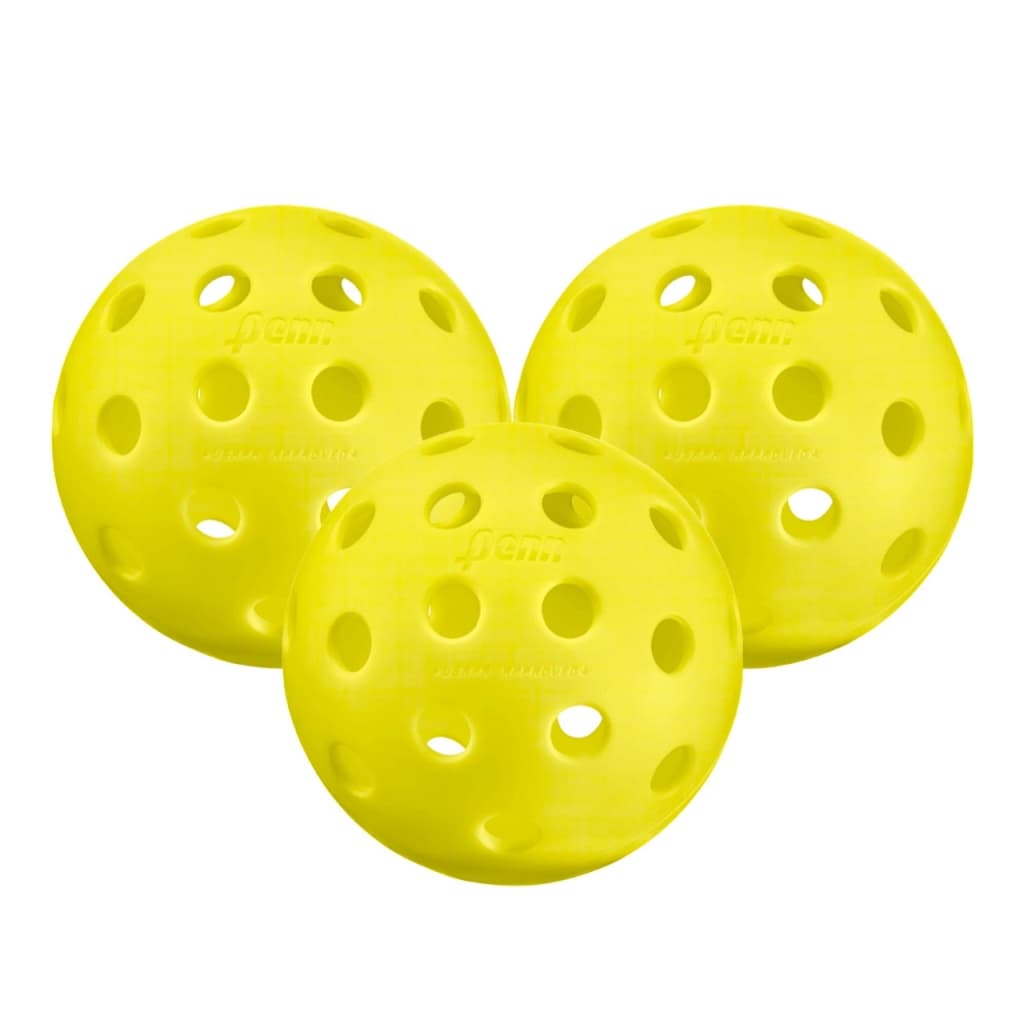
When playing pickleball indoors, a softer, slower ball is typically used. Indoor balls are made of lightweight, softer plastic with larger holes (typically 26), and they play slower and bounce a little lower than outdoor balls. Many players find them easier to control on smooth indoor floors.

Outdoor pickleballs are designed to withstand the elements, rougher court surfaces, and perform consistently when influenced by more external variables. They typically have 40 smaller holes, which help the ball fly more steadily in wind.
This type of ball is made of a harder plastic, and it tends to travel faster and bounce higher than the indoor ball.
Outdoor pickleballs are designed for play on concrete or asphalt courts. Outdoor balls are harder and can bounce and skid differently on indoor floors, so use an indoor ball inside when you can.