Pickleball's Secret Weapon: A Guide to the Lob Shot
If you're trying to add another tool to your pickleball arsenal, the lob is a great addition to your control/ slow game.
What is the Lob?
The offensive lob is a great way to surprise your opponent and move them off the net. It should look a lot like your regular dink, but you need to extend your paddle forward and out to get the height and depth you need. To hit the lob correctly, you need to use your body and have a soft grip on the paddle. You don't want to flick your wrist, as this won't get you the desired result. Instead, you want to pretend that the ball is staying on your paddle for longer and push it up and over your opponent's head.
When hitting the backhand lob, you want to keep the contact point out in front and push through the ball. You also want to make sure your weight is shifting forward and not staying on your back foot. To get the desired result, you need to open the face of your paddle right away and lead with your knuckles.
Finally, it's important to remember that the lob is a feel shot. You need to take your time with the ball and pick the right ball to lob. You also want to make sure you are not flicking your wrist and that you are pushing the ball up and over your opponent's head. With practice, you will be able to master the offensive lob and surprise your opponents.
Why Should You Lob?
In Pickleball, the lob is a strategic shot used to force your opponent to make a difficult return or miss the ball altogether. Using the lob in Pickleball can be an effective way to win a point, especially when your opponent is positioned at the non-volley zone (kitchen) close to the net. The LOB shot involves hitting the ball high and deep into your opponent's court, making it difficult for them to reach the ball in time to make a strong return. By using the lob, you can control the pace of the game and put your opponent on the defensive. Additionally, executing a well-placed lob can also disrupt your opponent's rhythm, giving you the advantage in the rally. Overall, incorporating the LOB into your Pickleball strategy can be a valuable tool for improving your game and increasing your chances of winning.
Guide to Lobbing
The lob is a crucial shot in Pickleball that requires a combination of power, precision, and strategy. Here is a general guide to help you effectively execute a lob:
1. Disguising the Lob
Hitting a lob is a great way to gain control of the court, but it's important to disguise it so your opponent doesn't know it's coming. When you're hitting your dink, you want it to look a lot like your regular shot.
This is why it's important to mimic your natural dink. Otherwise your opponents will see it coming and shut down your lob.
2. Grip and Stance
Grip and stance are two of the most important elements of hitting a lob. When it comes to grip, you want to make sure you have a good, soft grip on the paddle. This will help you control the ball and give you better touch. You also want to make sure your grip is comfortable and that you can move your wrist freely.
Many players hit the lob with the same continental-style grip they use for dinking, which helps disguise the shot. Some add a little topspin so the ball dips down in the back of the court instead of sailing long.
When it comes to stance, you want to make sure you are in a good, balanced position. You want to be able to move your feet quickly and easily, so you can adjust to the ball. You also want your weight moving forward, so you can push through the ball.
Finally, you want to make sure you are in a good athletic position. You want to be able to move your body quickly and easily, so you can adjust to the ball. You also want to make sure your body is in line with the ball, so you can hit it with the right angle and spin.
3. Hitting the Lob
Hitting a lob is a great way to surprise your opponent and gain control of the court. It's important to disguise your lob so your opponent doesn't know it's coming. To do this, you want your lob to look a lot like your dink. When you hit your lob, you want to extend your paddle forward and out, and use your body to create height and depth. You don't want to just flick your wrist, as this won't get you the desired result.
When practicing your lob, it's important to take your time and pick the right ball to lob, such as one you can reach out in front. Keep your contact point out in front and push through the ball.
It's also important to open the face of your paddle right away and lead with your knuckles on the backhand side. This will help you avoid pushing the ball too deep. With practice, you'll be able to hit the perfect lob and surprise your opponent.
4. Weight Shifting
Weight shifting is an important part of hitting a lob. When you hit a lob, you want to make sure that your weight is shifting forward so that you can generate the power and height needed to clear your opponent. To do this, you need to make sure that your contact point is out in front and that you are pushing through the ball with your body.
5. Contact Point and Extension
When it comes to hitting a lob, the contact point and extension of your paddle is key. Try to land it on the sweet spot and maintain contact as long as possible with the ball as you push up and over.
Finally, you want to make sure that you are taking your time with the ball. You don't want to rush the shot, as this will make it harder to control the ball.
You also want to make sure that you are leading with your knuckles on the backhand side, rather than your fingers. This will help you to create the power and control that you need for a successful lob.
6. Relaxed Wrist
Relaxed wrists are an important part of hitting a lob in pickleball. It is important to keep your wrist relaxed and not stiff when hitting a lob. This will help you to get the right amount of power and control when hitting the ball.
It is also important to make sure that you are not flicking your wrist when hitting the ball. This will cause the ball to go up but not have the depth that you need. Instead, you want to make sure that you are pushing the ball with your paddle and taking your time with it. This will help you to get the right amount of height and depth when hitting the lob.
7. Aim
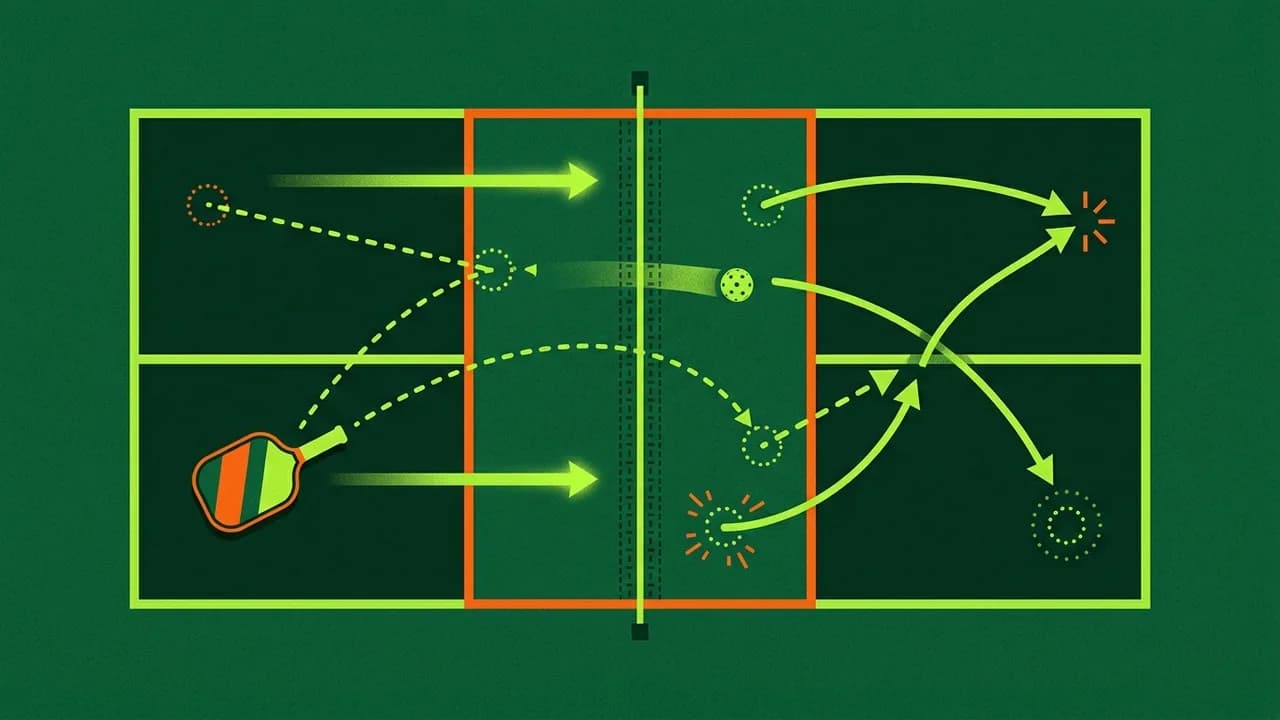
Your aim should be to hit the ball high and deep into your opponent's court, close to the baseline but not past it, since a lob that lands beyond the baseline is out. A nice rainbow arc is a great way to think about it towards the far corner of the court.
Conclusion:
Hitting a lob is a great way to surprise your opponent and push them back from the net. It takes practice and a good feel for the ball to be able to hit a successful lob. The key elements to remember are to make sure the ball is out in front, use your body to push the ball forward, and keep your wrist relaxed. With practice and dedication, you can master the lob and use it to your advantage in a match.
It is important to remember that the lob is a deceptive shot and should be disguised as much as possible. You don't want your opponent to know it's coming, so make sure it looks like your regular dink. With the right technique and a good feel for the ball, you can hit a successful lob and gain control of the court.
So, if you want to add a new tool to your game, practice your lob and use it when the situation is right. Good luck and have fun!