Pickleball Paddles for Tennis Players
Some links on this page are affiliate links. If you buy through them we may earn a commission at no extra cost to you. It does not change our recommendations. Learn more.
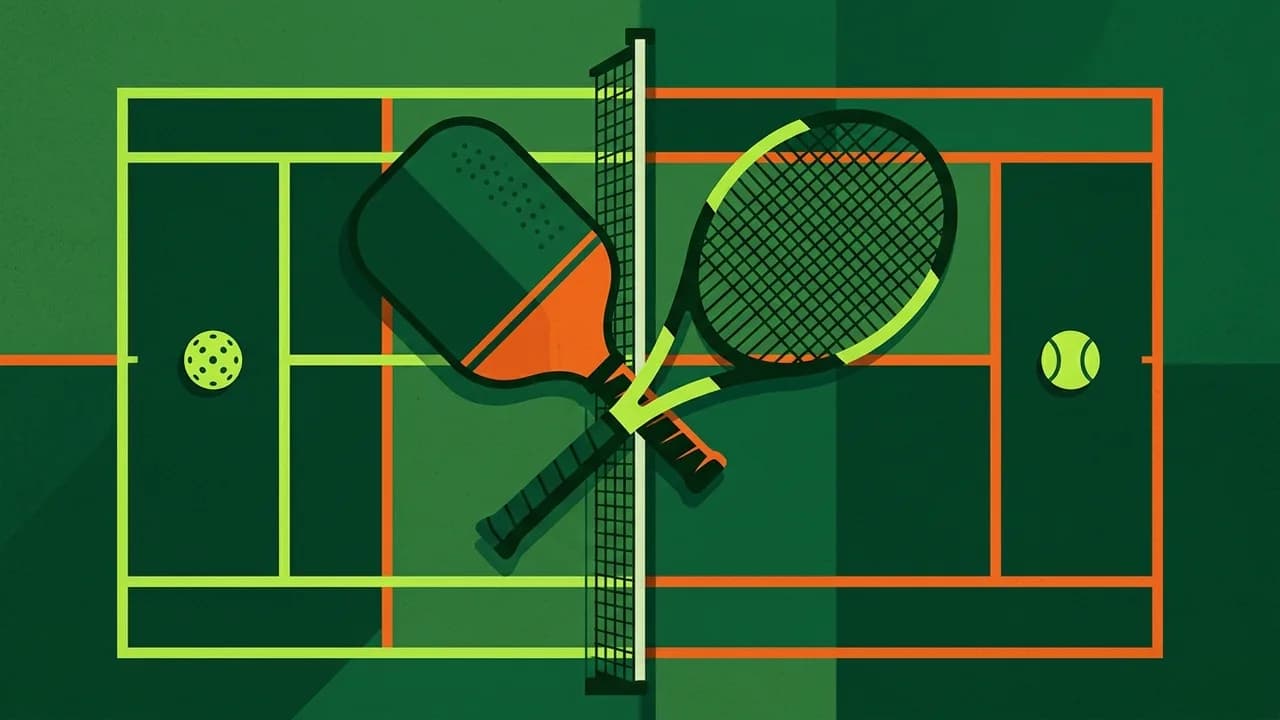
Are you a tennis player who is interested in trying out a new sport? Look no further than pickleball! This fast-paced game has grown in popularity in recent years and is a great way to stay active and improve your hand-eye coordination. As a tennis player, you may already have some of the skills needed to succeed on the pickleball court, but you'll need the right equipment, namely a good pickleball paddle. In this article, we'll explore the best pickleball paddles for tennis players, including those with long handles, the ability to generate maximum spin, and elongated paddles. So, let's look at some paddles worth trying.
Why Tennis Players Should Consider Pickleball
Are you a tennis player looking to switch things up and try a new sport? Or maybe you're already a pickleball enthusiast but want to improve your game with a paddle that suits your tennis background.
Whatever your reason may be, this article will provide you with all the information you need to choose the best pickleball paddle for tennis players.
Overview
Get ready to dive into an exhilarating exploration of how tennis players can take the pickleball world by storm! With their innate skills and passion for the game, tennis players often have a head start in many aspects of pickleball.
In this article, we'll unveil the secrets behind choosing the perfect pickleball paddle, and reveal why tennis players might benefit from specific paddle types. So buckle up, and let's smash our way into pickleball!
Why Tennis Players Might Be Interested in Pickleball
Tennis players bring skills that translate well to the pickleball court.
Their reflexes, footwork and experience with spin can give them a head start, though pickleball has its own rules and strategy (such as the non-volley zone) to learn.
So, what's the secret sauce to blending tennis expertise with pickleball perfection? The answer lies in choosing the right paddle!
When choosing a pickleball paddle, it's important to consider your playing style, level of experience, and personal preferences.
A paddle that works well for one player may not be the best fit for another.
That's why we've compiled a list of the top pickleball paddles for tennis players, with an emphasis on using a paddle similar in shape, handle, and feel to a tennis racquet.
Whether you're a beginner or an advanced player, we've got you covered.
So, let's dive in and find the perfect pickleball paddle for you!
Our number 1 pick for tennis players transitioning to pickleball is the CRBN-1X Power Series Paddle Line. With its long handle, solid feel and high spin potential, this paddle will feel familiar to many tennis players. Note that CRBN paddles have had approval-list controversies (see the pick below), so check USA Pickleball's current list if you play sanctioned events.
If you want to know more read on!
Our picks
Picks refreshed October 21, 2026 from each brand's own specs and buyer reviews. Not hands-on tested.
 #1
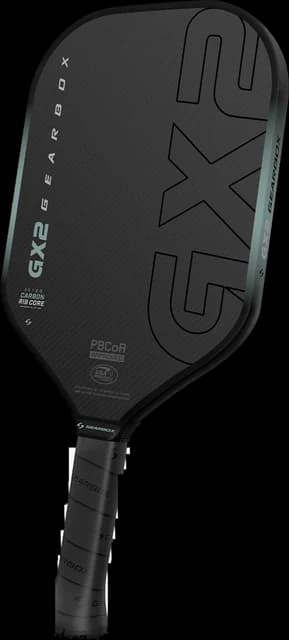
Gearbox GX2 Integra XL All Court
$170 · 8 oz · 16 mm · Elongated · Rib core
- Elongated shape
- 5.5" handle
- 8 oz
- Buyers rate it 4.9 out of 5 across 26 reviews on the seller's store
 #2
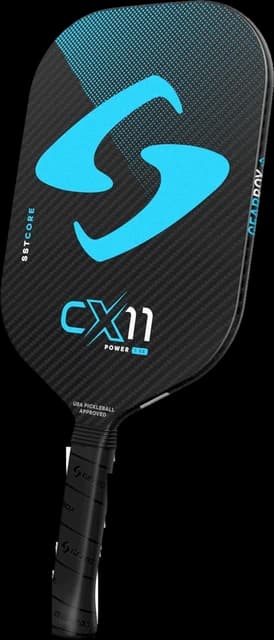
Gearbox CX11 Elongated Power 7.8oz SSTCORE
$100 · 7.8 oz · 11 mm · Elongated · Honeycomb core
- Elongated shape
- 5.5" handle
- 7.8 oz
- Buyers rate it 4.8 out of 5 across 47 reviews on the seller's store
 #3
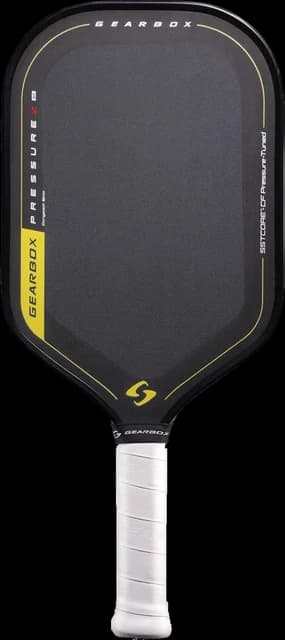
Gearbox Pressure X 8E Elongated
$280 · 8 oz · 16 mm · Elongated · Other core
- Elongated shape
- 5.5" handle
- 8 oz
- Buyers rate it 4.8 out of 5 across 18 reviews on the seller's store
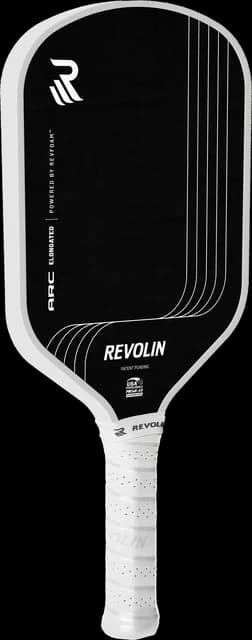 #4
Revolin Arc Elongated
$160 · 8–8.3 oz · 16 mm · Elongated · Foam core
- Elongated shape
- 5.5" handle
- 8–8.3 oz
- Buyers rate it 4.8 out of 5 across 10 reviews on the seller's store
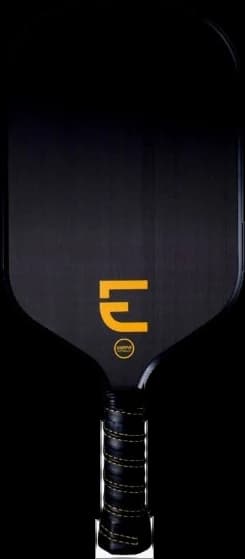 #5
Electrum Model E
$150 · 8–8.5 oz · 16 mm · Elongated · Honeycomb core
- Elongated shape
- 5.25" handle
- 8–8.5 oz
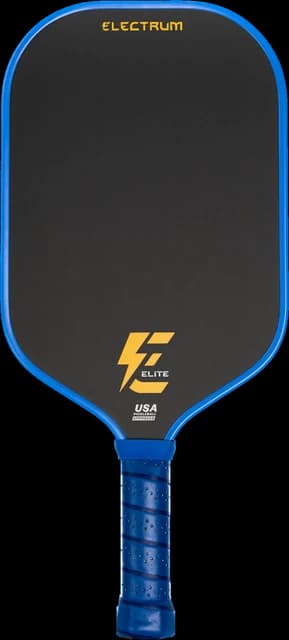 #6
Electrum Model E Elite Blue 4.25" Handle
$210 · 8–8.3 oz · 16 mm · Elongated · Honeycomb core
- Elongated shape
- 5.25" handle
- 8–8.3 oz
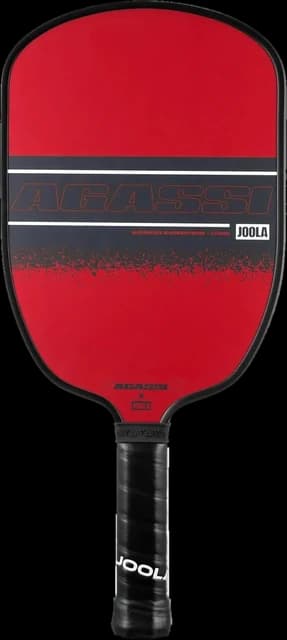 #7
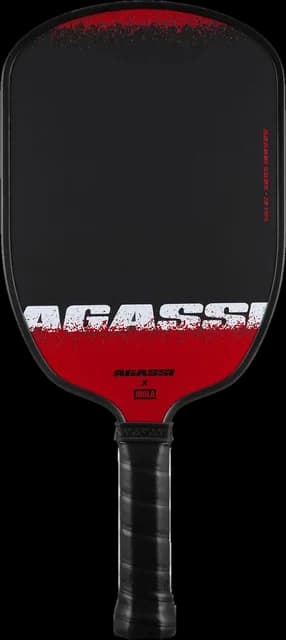
JOOLA Agassi Champion 12mm
$21 · 7.8 oz · 12 mm · Elongated · Honeycomb core
- Elongated shape
- 5.5" handle
- 7.8 oz
 #8
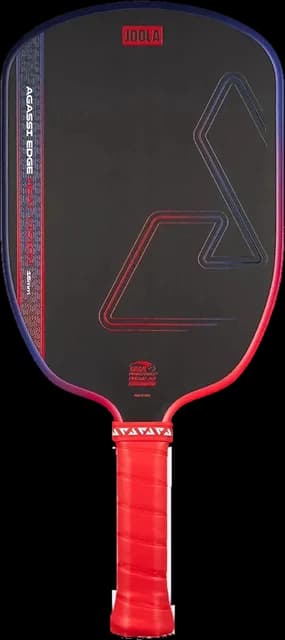
JOOLA Agassi Edge 16mm
$50 · 7.8 oz · 16 mm · Elongated · Honeycomb core
- Elongated shape
- 5.5" handle
- 7.8 oz
 #9
JOOLA Agassi Edge Heat Vision
$100 · 7.8 oz · 16 mm · Elongated · Foam core
- Elongated shape
- 5.5" handle
- 7.8 oz
 #10
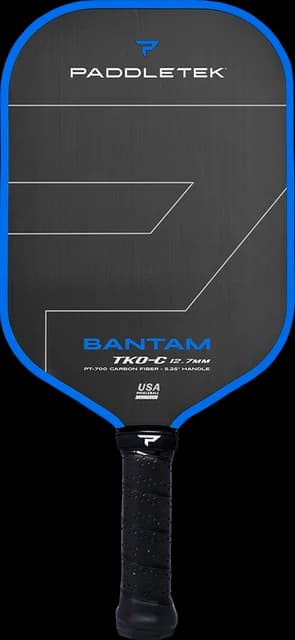
Paddletek Bantam TKO-C
$200 · 7.7–8.1 oz · 12.7 mm · Elongated · Honeycomb core
- Elongated shape
- 5.25" handle
- 7.7–8.1 oz
How we picked
We have not tested these paddles. Each pick follows this rule over the brand's published specs and its buyers' review scores:
- Elongated shape.
- Handle of 5.25 inches or longer.
- Ranked by buyer rating, at most three per brand.
What the research says
Tennis converts usually value reach, a long handle and some weight. These are general preferences, not test results; Pickleball Effect's Hot List covers tested paddles. Source: Pickleball Effect Hot List.
Frequently asked questions
Did you test these paddles?
No. We have not weighed, swung or lab-tested them. Picks are ranked by a published rule over the brand's listed specs and its buyers' review scores, and the rule is spelled out on this page. Where an independent lab has measured a paddle we say so on that paddle's page.
Are these paddles approved for tournament play?
Check each paddle on the USA Pickleball approved list before you enter a sanctioned event. Approval status can change after a paddle ships, and the list is the only authority.
Can I use my tennis swing?
Pickleball rewards shorter swings and soft hands at the kitchen. Take the groundstroke instincts but shorten them.
More from our paddle reviews
- CRBN-1X Power Series Carbon Fiber
- Diadem Warrior Carbon Fiber Paddle Review
- Electrum Pro 2 Review
- Gearbox CX14 Ultimate Review
- Oneshot Pureshot Brian Ashworth Series Paddle Review
- Paddletek Tempest Wave Pro Review
- Selkirk VANGUARD 2.0 Mach6 Lightweight Carbon Fiber Pickleball Paddle
- Diadem Icon v2
- Joola Ben Johns Hyperion CFS 16
- Prokennex Black Ace Pro Review
Do tennis players have an advantage on the pickleball courts?
Similarities and Differences between Tennis and Pickleball
Tennis and pickleball share some similarities, such as the use of a ball and a racquet.
However, there are significant differences between the two sports.
Pickleball is played on a smaller court (20 x 44 feet), with a slightly lower net and different scoring.
The ball used in pickleball is also different: a perforated plastic ball that is larger than a tennis ball but lighter and with less bounce.
Explanation of how tennis skills can translate to pickleball
Despite the differences, tennis players can use their skills to their advantage in pickleball.
For example, the proper swing mechanics developed in tennis can be applied to pickleball.
Tennis players also have experience with footwork and court positioning, which can help them move quickly and efficiently on the pickleball court.
Additionally, tennis players are often skilled at generating spin on the ball, which can be a valuable asset in pickleball.
However, there are also some adjustments that tennis players need to make when transitioning to pickleball.
The smaller court size and lower net height require players to adjust their shot selection and court positioning.
Additionally, the different ball used in pickleball requires players to adjust their timing and shot selection.
Overall, while tennis players may have some advantages on the pickleball court, they still need to adapt to the unique aspects of the sport to be successful.
With the right equipment and practice, tennis players can become skilled pickleball players and enjoy the sport's fast-paced and social nature.
Key Features to Consider When Choosing a Pickleball Paddle for Tennis Players
Grip and Weight
When choosing a pickleball paddle, grip and weight are two important factors to consider.
Tennis players are used to a certain grip size and weight distribution, so it's important to find a paddle that feels comfortable and familiar.
Look for a paddle with a grip size that matches your tennis racquet and a weight that feels similar to what you're used to.
A heavier paddle can give you more power, but a lighter paddle may be easier to maneuver.
Size and Material
The size and material of a pickleball paddle can also make a big difference for tennis players.
Look for a paddle with a larger sweet spot, which will give you more forgiveness on off-center hits.
The material of the paddle can also affect the feel and power of your shots.
Some paddles are made of graphite, which is lightweight and provides good control, while others are made of composite materials, which can be more durable and provide more power.
Core and Edge Guard
The core and edge guard of a pickleball paddle can also impact your game.
The core of the paddle can be made of different materials, such as polymer or foam, which can affect the paddle's power and control.
The edge guard is important for protecting the paddle from damage and can be made of materials like rubber or plastic.
Look for a paddle with a durable edge guard that can withstand the wear and tear of regular use.
Power and Control
As a tennis player, you may be used to generating a lot of power with your shots.
Look for a pickleball paddle that can provide you with the power you need to hit strong shots.
However, control is also important in pickleball, especially when playing at the net.
Look for a paddle that can provide you with both power and control, so you can hit strong shots while still maintaining accuracy.
Maneuverability and Spin
Maneuverability and spin are two more important factors to consider when choosing a pickleball paddle.
Tennis players are used to being able to move quickly around the court, so look for a paddle that is easy to maneuver and can help you get to the ball quickly.
Spin is also important in pickleball, as it can help you control the ball and keep your opponents guessing.
Look for a paddle with good spin capabilities, so you can use your tennis skills to your advantage on the pickleball court.
As a tennis player, choosing the right pickleball paddle can make a big difference in your game.
Consider factors like grip, weight, size, material, core, edge guard, power, control, maneuverability, and spin when making your choice.
By finding a paddle that feels comfortable and familiar, you can use your tennis skills to dominate on the pickleball court.
Advantages of a Long Handle Pickleball Paddle
Long handle pickleball paddles are becoming increasingly popular among tennis players who are transitioning to pickleball.
These paddles are designed to mimic the feel of a tennis racquet, making it easier for tennis players to adjust to the new sport.
In this section, we will discuss the advantages and disadvantages of using a long handle pickleball paddle for tennis players.
Advantages
1. Better Two-Handed Backhand Shot: A long handle paddle allows for a better two-handed backhand shot.
Tennis players who are used to using two hands on their backhand will find it easier to transition to pickleball with a long handle paddle.
2. Increased Reach: Elongated paddles increase the length of the paddle face, which can increase reach.
This is especially beneficial for tennis players who are used to covering a larger area on the court.
3. More Familiar Feel: Tennis players who are used to the feel of a tennis racquet will find that a long handle paddle provides a more familiar feel.
This can help with the transition to pickleball and make it easier to adjust to the new sport.
Disadvantages
1. Heavier Weight: Long handle paddles are often slightly heavier than standard paddles.
This can be a disadvantage for players who prefer a lighter paddle.
2. Reduced Maneuverability: The longer handle can make the paddle less maneuverable, which can be a disadvantage for players who rely on quick movements and agility.
3. Smaller Sweet Spot: Long handle paddles tend to have a smaller sweet spot than standard paddles.
This can make it more difficult to hit the ball accurately and consistently.
Overall, long handle pickleball paddles can be a great option for tennis players who are transitioning to pickleball.
However, it is important to consider the advantages and disadvantages before making a purchase.
Tennis players who are used to a lighter, more maneuverable paddle may find that a long handle paddle is not the best option for them.
Why do tennis players use pickleball paddles that generate maximum spin?
Spin is an essential aspect of pickleball that can make or break a player's game.
Tennis players who are used to generating spin with their racquets can use this skill to their advantage in pickleball.
In this section, we will explore how spin works in pickleball and why it is important, as well as how tennis players can use their existing spin skills to their advantage in pickleball.
How does spin work in pickleball?
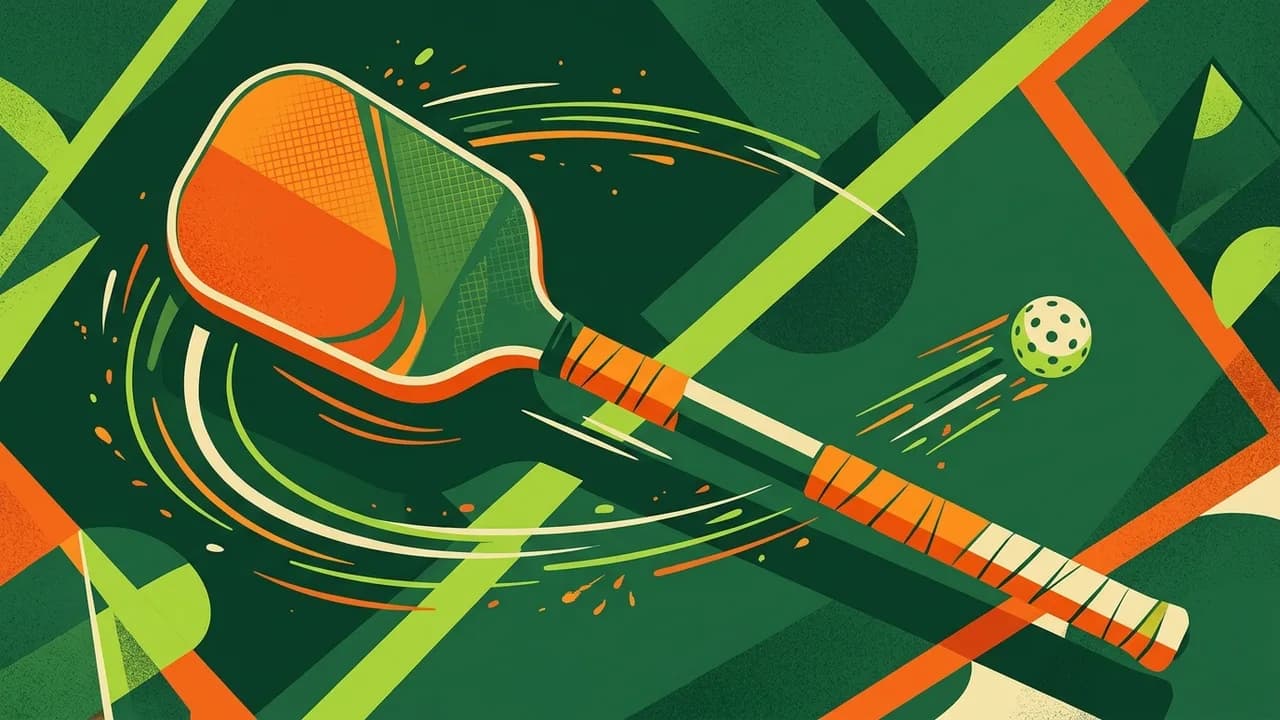
Spin in pickleball is created by the rotation of the ball as it is hit by the paddle.
The direction and speed of the paddle's movement at the point of contact with the ball determine the type and amount of spin generated.
The two main types of spin in pickleball are topspin and backspin, along with sidespin.
Topspin is created when the paddle moves from low to high at the point of contact, causing the ball to spin forward.
This type of spin can be used to create a more aggressive shot that bounces high and fast off the opponent's side of the court.
Backspin, on the other hand, is created when the paddle moves from high to low at the point of contact, causing the ball to spin backward.
This type of spin can be used to create a softer shot that bounces low and slow, making it harder for the opponent to return.
Why is spin important in pickleball?
Spin is important in pickleball because it can affect the trajectory, speed, and bounce of the ball, making it harder for the opponent to return.
A well-placed shot with the right amount of spin can force the opponent to make a mistake or hit a weak return, giving the player an advantage in the game.
Additionally, spin can be used to control the ball's placement on the court, allowing the player to hit shots that are difficult for the opponent to reach.
Tennis players who are used to generating spin with their racquets can use this skill to their advantage in pickleball.
By using a paddle that is designed to generate maximum spin, tennis players can create shots that are more difficult for their opponents to return.
Additionally, tennis players can use their existing spin skills to control the ball's placement on the court, making it harder for their opponents to anticipate their shots.
Overall, spin is an essential aspect of pickleball that can give players an advantage in the game.
Tennis players who are looking to transition to pickleball should consider using a paddle that is designed to generate maximum spin to take advantage of their existing spin skills.
Why should a tennis player use a heavier pickleball paddle?
As a tennis player, you might be used to the weight and feel of a tennis racquet.
However, when transitioning to pickleball, you might find that the lighter weight of a standard pickleball paddle feels unfamiliar and uncomfortable.
This is where a heavier paddle can come in handy.
The benefits of using a heavier paddle for tennis players
One of the main benefits of using a heavier pickleball paddle is that it can give you a more familiar feel.
If you're used to the weight of a tennis racquet, a heavier paddle can help you adjust to the different weight distribution of a pickleball paddle.
Additionally, a heavier paddle can provide more power and stability, which can be beneficial for tennis players who are used to hitting with more force.
However, it's important to note that a heavier paddle might not be the best choice for everyone.
If you have any pre-existing injuries or conditions that make it difficult to handle a heavier paddle, it might be better to stick with a lighter weight.
Additionally, if you're a beginner or intermediate player, a lighter paddle might be easier to handle and can help you develop proper technique.
How to choose the right weight for your paddle
When choosing a pickleball paddle, it's important to consider the weight of the paddle.
Paddles typically range from about 6.5 to 9 ounces, and USA Pickleball does not set a paddle weight limit.
As a tennis player, you might want to consider a paddle that is on the heavier side.
However, it's important to find a weight that feels comfortable and manageable for you.
You don't want a paddle that is so heavy that it causes strain or fatigue.
On the other hand, a paddle that is too light might not provide enough power or stability.
One way to determine the right weight for your paddle is to try out different weights and see which one feels the most comfortable and natural for you.
You can also consider your playing style and preferences.
If you prefer to hit with more power and force, a heavier paddle might be a better fit.
If you prefer finesse and control, a lighter paddle might be more suitable.
Ultimately, the right weight for your paddle will depend on your individual needs and preferences.
Don't be afraid to experiment and try out different weights until you find the perfect fit.
Why do tennis players often use elongated pickleball paddles?
When it comes to pickleball paddles, there are a variety of shapes and sizes to choose from.
One option that tennis players often prefer is the elongated paddle.
But what exactly is an elongated paddle, and why do tennis players gravitate towards it?
What is an elongated paddle?
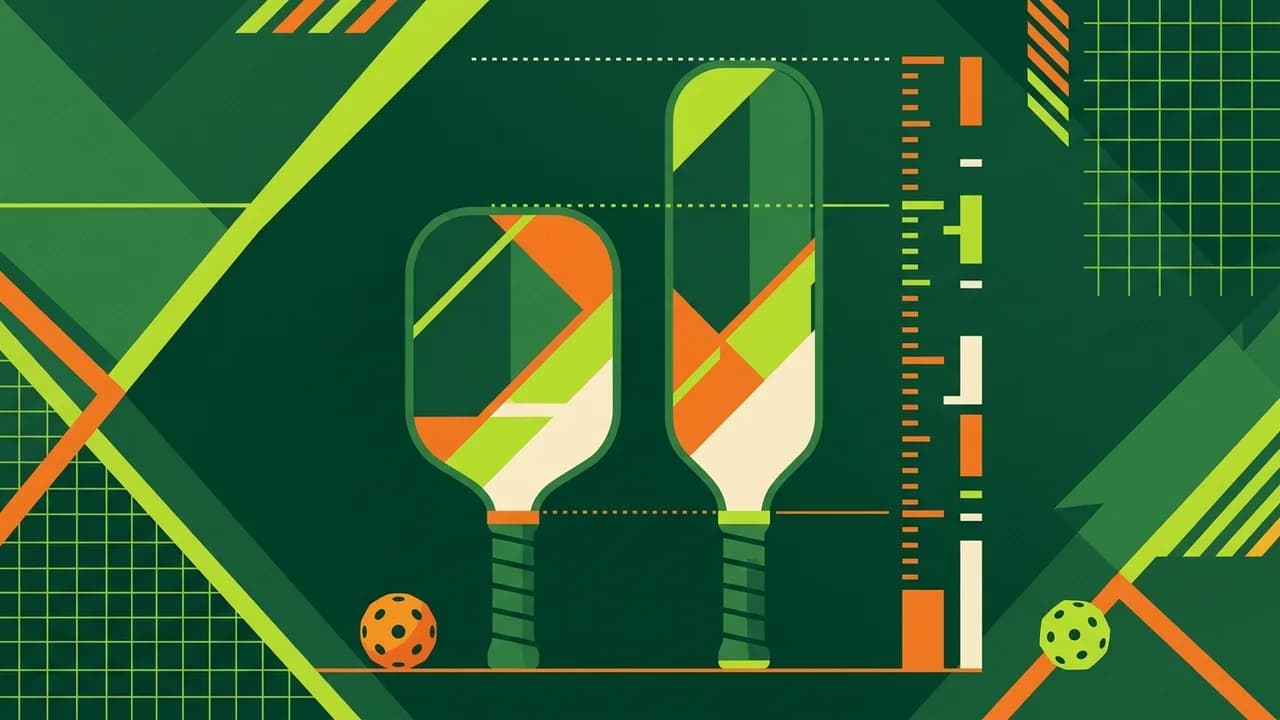
An elongated paddle is a type of pickleball paddle that has a longer face than a standard paddle.
This extra length can range from just a few inches to several inches, depending on the specific paddle.
The elongated shape also typically means that the paddle has a narrower width than a standard paddle.
Advantages of using an elongated paddle for tennis players
For tennis players who are transitioning to pickleball, the elongated paddle can offer a few key advantages.
First and foremost, the longer face can provide more reach, which can be especially helpful for players who are used to covering a larger court.
Additionally, the narrower width of the paddle can make it feel quicker through the air.
Another advantage of using an elongated paddle is that it can help tennis players adjust to the different swing mechanics required for pickleball.
Because the paddle is longer and narrower, it can encourage players to use a more compact swing, which can be more effective in pickleball than the longer, more sweeping swings that are common in tennis.
Disadvantages of using an elongated paddle for tennis players
While there are certainly benefits to using an elongated paddle, there are also some potential drawbacks to consider.
One of the biggest is that the narrower width of the paddle can make it more difficult to generate power.
This can be especially challenging for players who are used to relying on their strength to hit hard shots.
Another potential disadvantage is that the longer face of the paddle can make it more difficult to control the ball on off-center hits.
This is because the elongated shape typically has a smaller sweet spot than a wide-body paddle.
Overall, while an elongated paddle may not be the best choice for every tennis player, it can be a useful tool for those who are looking to make the transition to pickleball.
By providing more reach and encouraging a more compact swing, an elongated paddle can help tennis players adapt to the unique demands of this fast-paced and exciting sport.
Conclusion
In conclusion, tennis players looking to conquer the pickleball court need to arm themselves with the right paddle. While the two sports share some similarities, there are key differences to consider when selecting a pickleball paddle. A long handle paddle may be advantageous for its extended reach, while a heavier paddle can help you generate more power on your shots. And don't forget about spin - a crucial element of the game that can be mastered with the right paddle. Paddles from this list to look at include the CRBN-1X, Diadem Warrior and JOOLA Hyperion CFS 16. Try a few to see what suits you. After all, you never know - you may just find your new favorite sport!