Top 12 Pickleball Paddles For Spin
Some links on this page are affiliate links. If you buy through them we may earn a commission at no extra cost to you. It does not change our recommendations. Learn more.
Spin numbers depend on the test method and the paddle's surface wear. Check the approved list and the paddle's own page for any independent measurements. Filter all paddles by specs →
Spin is an important part of the game for many competitive players, and this guide covers what to look for in a spin paddle. We'll dive into the world of paddle surfaces, materials, factors affecting spin, different types of spin techniques, and how to choose the best paddle for your spinning needs. Ready to put a new spin on your pickleball game? Keep reading and let's get started!
Understanding The Importance Of Spin In Pickleball
Spin is a crucial technique in pickleball that can significantly impact a player's performance on the court. By incorporating spin into their shots, players can add variety and control, making it challenging for opponents to predict and return the ball successfully. Understanding how to execute different types of spin, such as topspin and backspin, allows players to develop strategic approaches to their gameplay.
Incorporating spin in pickleball provides multiple benefits, one of which is the ability to create deceptive shots. For example, applying topspin causes the ball to dip quickly after crossing the net, while backspin keeps the ball lower and slows it down after the bounce – both scenarios leading opponents potentially mistiming their swings or making awkward adjustments in order to return them accurately. Spin also helps with shot control, such as keeping drives in the court and dropping dinks into the kitchen.
Another advantage of utilizing spin lies in enhancing power without sacrificing control over shot direction; topspin lets players swing harder while keeping the ball in the court
Types Of Paddle Surfaces For Spin
Discover the different types of paddle surfaces for spin, including smooth surface paddles, textured surface paddles, composite surface paddles and hybrid surface paddles, and find out which one is best for your playing style. Keep reading to learn more!
Smooth Surface Paddles
Smooth surface paddles are popular with players who value consistency and touch over maximum spin. They are generally made from fiberglass or carbon fiber with a smooth finish, which gives a predictable feel on dinks and drops but less grip on the ball than textured faces.
Carbon fiber is often favored over fiberglass for its lighter weight and stiffness, though fiberglass is common on more affordable paddles. Smooth surface paddles should not be confused with textured paddles, which feature a rougher finish designed to create more friction with the ball and enhance grip when applying various spins. When considering factors like paddle weight, grip size, edge guard design, and core material alongside a smooth facing material, it's possible to find a perfect combination that works best for your playing style and skill level - maximizing both power and control while fine-tuning your ability to apply advanced spins during gameplay.
Textured Surface Paddles
Textured surface paddles have become increasingly popular in the world of pickleball due to their ability to put more spin on the ball. These types of paddles have a rougher surface, allowing players to create more friction and generate more spin when hitting the ball. The texture can vary depending on the paddle's construction materials, with some having a sandpaper-like feel and others having ridges or bumps.
Raw carbon fiber paddles such as the Electrum Model E and CRBN Power Series are well-known examples, as are paddles with a sprayed or etched texture. Check the current USA Pickleball approved paddle list, since paddle surface roughness is regulated for sanctioned play.
As players continue to strive for better proficiency in their game, textured surface paddles provide another tool for increasing control and accuracy on each shot.
Composite Surface Paddles
Composite surface paddles are very popular in the pickleball world. These paddles typically feature a fiberglass (or blended) face, often with a light texture, that gives a balance of power, control and some spin. They also tend to be slightly heavier than graphite paddles but provide additional energy absorption at impact, resulting in refined touch and feel.
One example of a composite paddle is the Selkirk Amped Epic, which has a FiberFlex fiberglass face and a thicker polypropylene X5 core aimed at power and control.
Another major advantage of composite surface paddles is affordability compared to high-end graphite or carbon fiber options. Fiberglass reinforced composites offer excellent value without sacrificing crucial elements like durability or stiffness needed for successful gameplay- making them ideal choices for beginners or recreational players looking to improve their game without breaking the bank.
Hybrid Surface Paddles
Hybrid surface paddles are a combination of different materials used in paddle construction. These types of paddles offer the benefits of multiple surfaces, making them versatile for players who want to add spin to their shots. For example, some hybrid surface paddles may combine carbon fiber and polymer materials, providing a balance between power and control. Other hybrid surfaces will combine fiberglass with graphite or carbon fiber, providing durability and a larger sweet spot.
One popular hybrid surface paddle is the Selkirk AMPED Omni X5 FiberFlex Pickleball Paddle. It features a composite face made from Fiberglass X5 technology combined with a polypropylene core for increased touch and ball control. The grip is also designed to be comfortable while allowing players to maintain excellent hand positioning. Consider trying out one of these paddle options if you're looking for something new that combines the best features of other models.
It's essential to choose your pickleball paddle based on your style and needs as well as the type of spin you want to achieve in gameplay. Whether you're an experienced player or just starting, selecting the right type can help improve accuracy, power, and ball control when playing pickleball games competitively or recreationally!
Best Pickleball Paddles For Spin
Here are some pickleball paddles known for spin. Models, prices and approval status change, so check current details before you buy.
Now that you know what you're looking for, let's look at the best pickleball paddles for spin. Starting with the Legacy Pro.
1. The Legacy Pro Review
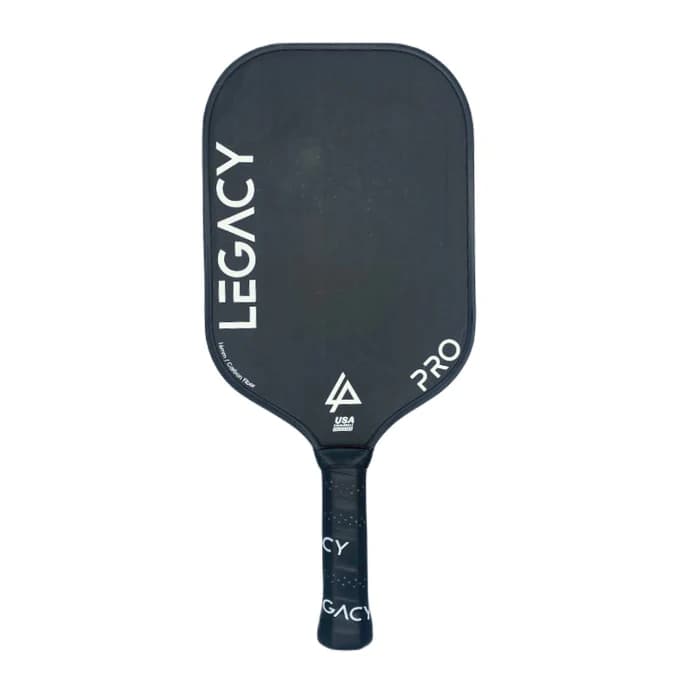
The Legacy Pro is a power-oriented paddle with a lot of spin. With a 16 millimeter thick polymer core, injected foam, and a Toray T700 carbon fiber face, the paddle is well built. It has a low swing weight, making it easy for players to maneuver, and the large sweet spot ensures that the ball strikes the paddle accurately. The Legacy Pro is a great choice for players who want to dominate on the singles court, and some players have praised it. However, the powerful nature of the Legacy Pro may not be suitable for all players. The paddle is prone to scratches and dust, which can leave marks on the surface. Additionally, its formidable power can make it a bit of a challenge to control, particularly when playing doubles. The 5.3 inch handle may feel inadequate for those with larger hands, and players will need to be mindful of their swings to avoid overhitting the ball. Nevertheless, the Legacy Pro is a premium paddle for players who want power.
Pros
- Legacy Pickleball's Pro paddle features a 16 millimeter thick polymer core, thermal forming, injected foam, and Toray T700 carbon fiber face
- The edge guard provides perimeter weighting, making outer edges feel more solid during gameplay
- Tighter weave pattern than the CRBN 1X 16 millimeter paddle
- Powerful, with a low swing weight and balance point- Large sweet spot and good dwell time for volleys, drives and blocks
- Unique feel compared to other power paddles
- Very powerful, with reviewers comparing its power to the Diadem Vice
- Very powerful, so players need to avoid swinging too hard
- Large sweet spot and good dwell time for volleys, drives and blocks
- Suited to singles; may be harder to control in doubles
- Some players report it is a good value for the price
Cons
- The handle length of the Legacy Pro paddle may be insufficient for those with larger hands
- Despite its power and build quality, the Legacy Pro paddle may not be the best choice for doubles
- The surface of the paddle grabs a lot of ball dust, leaving imprints on the face that make it look like the core can be seen through it
- The Legacy Pro paddle seems to be prone to scratches, leaving white marks that can't be removed with a carbon eraser.
2. Six Zero Black Diamond and Double Black Diamond Review
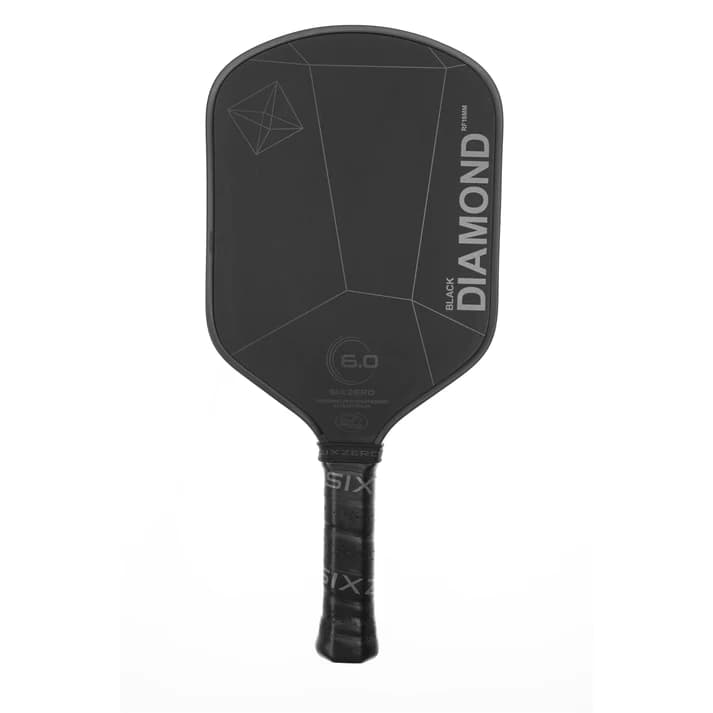
The Six Zero Black Diamond Power paddle is a paddle for pickleball players looking for an all-court option with some power. This paddle features a slightly flared shape that optimizes the sweet spot in the core hitting zone, allowing for improved reach. Six Zero says its wave technology adds power and spin.
Pros
- Durable construction
- Good power and spin
- Ergonomic handle for better grip
- Optimized for reach and aerodynamics
- Flared shape for improved sweet spot
Cons
- Expensive price tag
- May be too powerful for novice players
- May require more effort to control
3. Joola Ben Johns Hyperion CFS 16
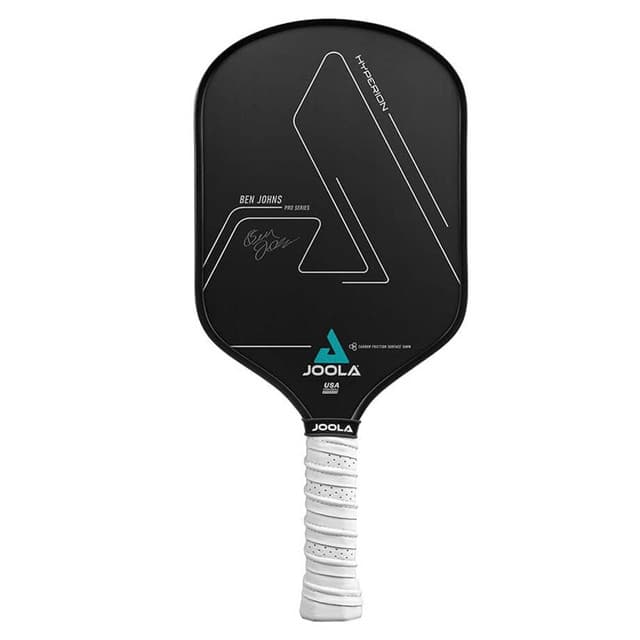
The JOOLA Ben Johns Hyperion CFS 16 is a high-performance pickleball paddle designed for advanced players, developed in partnership with Ben Johns. It features JOOLA's Carbon Friction Surface (CFS), a textured carbon face for spin and control, on a 16mm reactive polymer core. It weighs roughly 8.2 to 8.4 oz in the standard weight, with a lighter Swift version around 7.9 oz. The Hyperion CFS 16 also has a head shape designed to be quick through the air and JOOLA's Hyperfoam Edge Wall, a foam injected into the perimeter, which is meant to add stability and a larger sweet spot. Additionally, JOOLA has a swift version of the paddle, which is designed for aggressive and offensive players who enjoy faster shots. The swift version of the paddle is designed with JOOLA's Swift technology, which makes the paddle lighter and faster in hand.
Pros
- Carbon Friction Surface (CFS) gives a textured face for spin and control
- 16mm reactive polymer core for touch and control
- Elongated, power-leaning all-court shape
- Hyperfoam Edge Wall adds weight and stability to the paddle
- Head shape designed to be quick through the air
- Swift version is available for aggressive and offensive players
Cons
- Higher cost
- May be too heavy for some players
- The elongated shape has a smaller sweet spot than wide-body paddles
- Swift version may be too fast for some players
- Some may prefer a different grip size
4. CRBN-1X Power Series Carbon Fiber
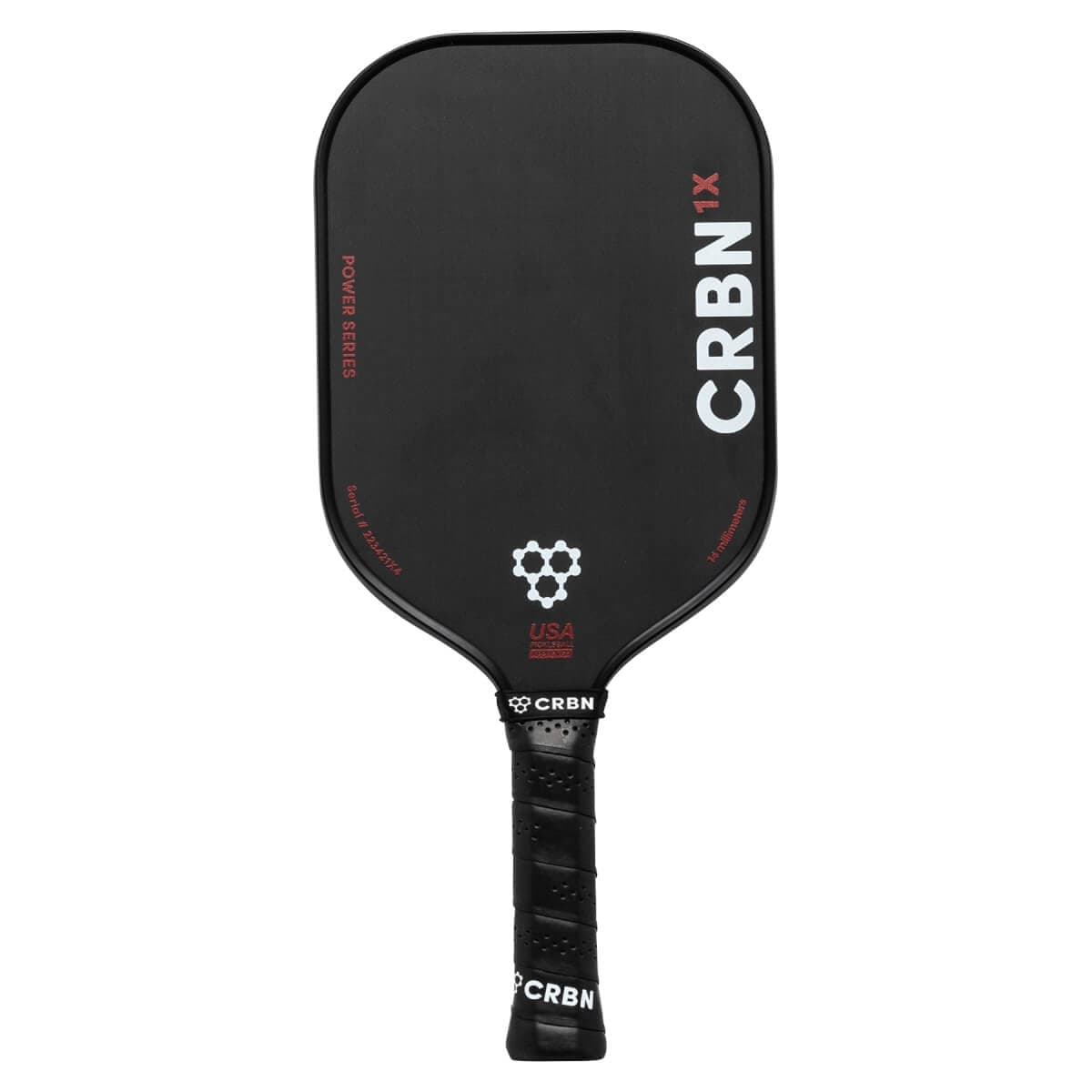
CRBN's Power Series paddles were a much-discussed release. The one-piece unibody design ensures that the paddle is sturdier than ever while maintaining a stylish and sleek look. Featuring a Toray T700 carbon fiber face with a polymer core, these paddles are incredibly strong, with a reinforcement technique known as thermoforming, making them almost indestructible. The line comes in more than one shape and core thickness. These paddles pack a mean punch with their high spin rate, providing players with the ability to deliver aggressive serves and roll volleys. Overall, the Power series offers a lot of power and spin. The Power series paddles made waves in the pickleball community after their release. There has been controversy about CRBN paddles and USA Pickleball approval, but reviewers describe a strong blend of power and control. The sweet spots are consistent across the face and provide a solid feel, with a slight drop-off on the edges. If you're looking for a blend of power and control, the 1X 16 millimeter paddle is a great option. It's easy to control and reset after aggressive shots. The 14mm 1X is stiffer and boasts more pop than the 16mm but might not be suitable for those who prefer less power. The 2X paddles offer notably less power than the 1X but have faster hand speed and can be customized with lead tape. With good build quality and high spin rates, the Power series suits players looking for an aggressive all-court paddle.
Pros
- One-piece unibody design for added durability
- Thermoforming for a stiffer, stronger paddle
- Elongated and standard shapes available in 14mm or 16mm versions
- Lightweight yet strong paddle with polymer cores and Toray T700 carbon fiber faces
- Plenty of spin for aggressive shots
- 1X paddles are well-balanced for power and control suitable for all-court play
- 2X paddles have faster hand speed and can be customized with lead tape
- Consistent sweet spot across the face
- High build quality
- 16mm version recommended for a more "poppy" feel
Cons
- List price was about $229, which may be too expensive for some players.
- The 1X has a longer handle (about 5.5 inches) than the 2X (about 5 inches), which suits two-handed backhands but may feel long to some players.
- In April 2022 USA Pickleball removed CRBN paddles from its approved list after testing found two commercially available paddles non-compliant. CRBN later said newer paddles were added back, but check USA Pickleball's current list if you play sanctioned events.
- 14mm 1X paddle may not be suitable for players who prefer less power.
- 2X paddles have noticeably less power than the 1X, which may not be ideal for players who prefer a more powerful paddle.
- Higher swing weight of the 1X 16mm paddle could pose an issue for some players.
5. Gearbox CX14 Ultimate Review
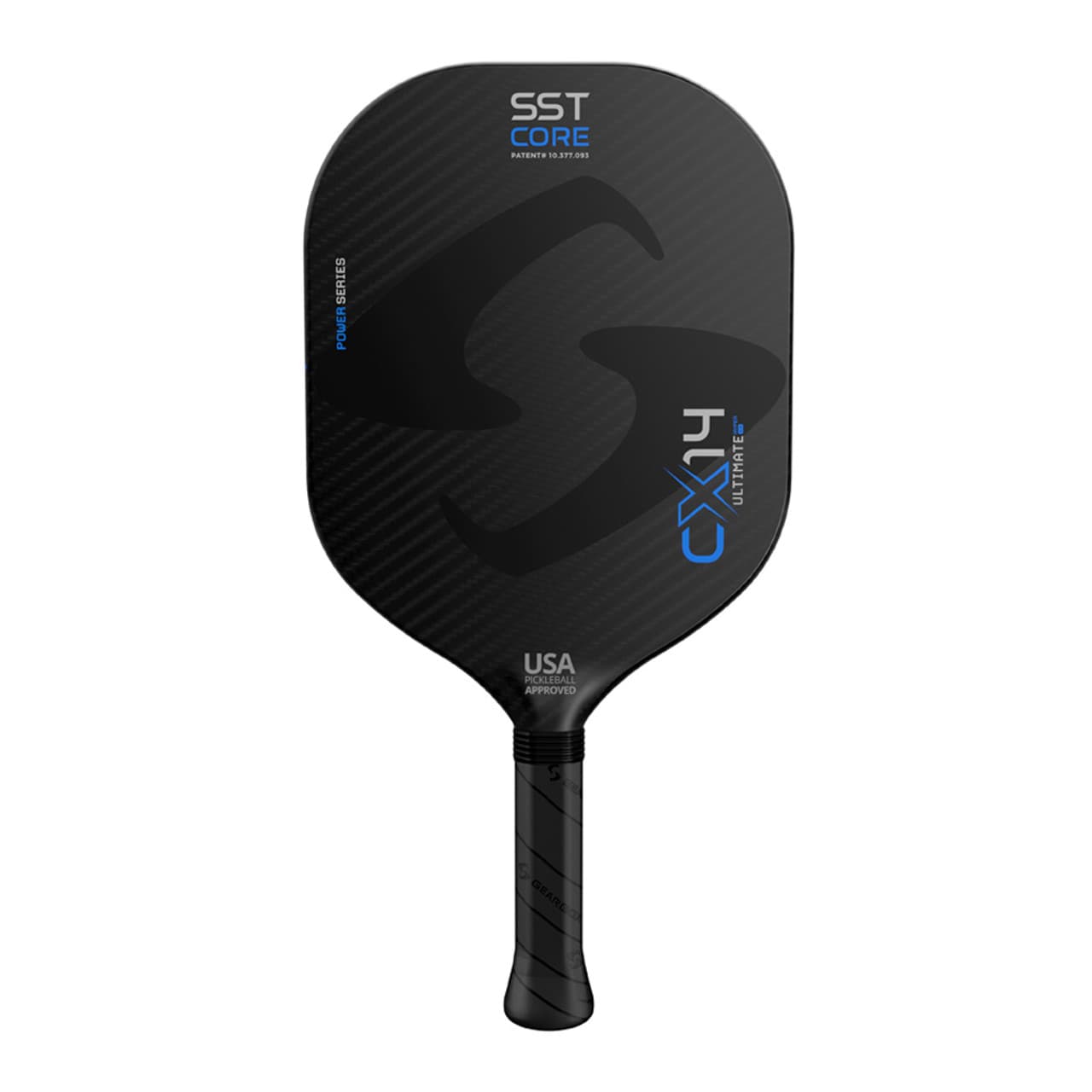
Gearbox's CX14 Ultimate is an all-around paddle with added power compared with the original CX14, thanks to a higher swing weight. It has a textured face for spin, and its edgeless-style construction gives it a smaller sweet spot than good polymer paddles. Gearbox paddles are generally stiffer and firmer than polymer-core paddles, so demo one first.
Pros
- Higher swing weight than the original CX14
- Subtle and attractive design with color flares
- Handle has a pronounced knob at the end
- Textured face for spin
- More power than the original CX14
- Additional power can be achieved with lead tape, suitable for singles play
- Designed to be an all-arounder with added power
- Reported to have a better sweet spot than the original CX14
- Closer to a polymer feel than earlier Gearbox paddles, with good durability
- Recommended for Gearbox fans, may not be the best for those new to Gearbox paddles
Cons
- The handle knob may not be comfortable for some players with two-handed grip
- The texture on the paddle may wear off over time and affect spin on certain shots
- The sweet spot of the paddle is still below average compared to good polymer paddles
- Edges give little energy return, so players often add lead tape
- Priced at the premium end of the market (about $250 at launch), which some reviewers felt was high for the changes made
- Not the best option for players who are new to Gearbox paddles
6. Electrum Pro 2 Review
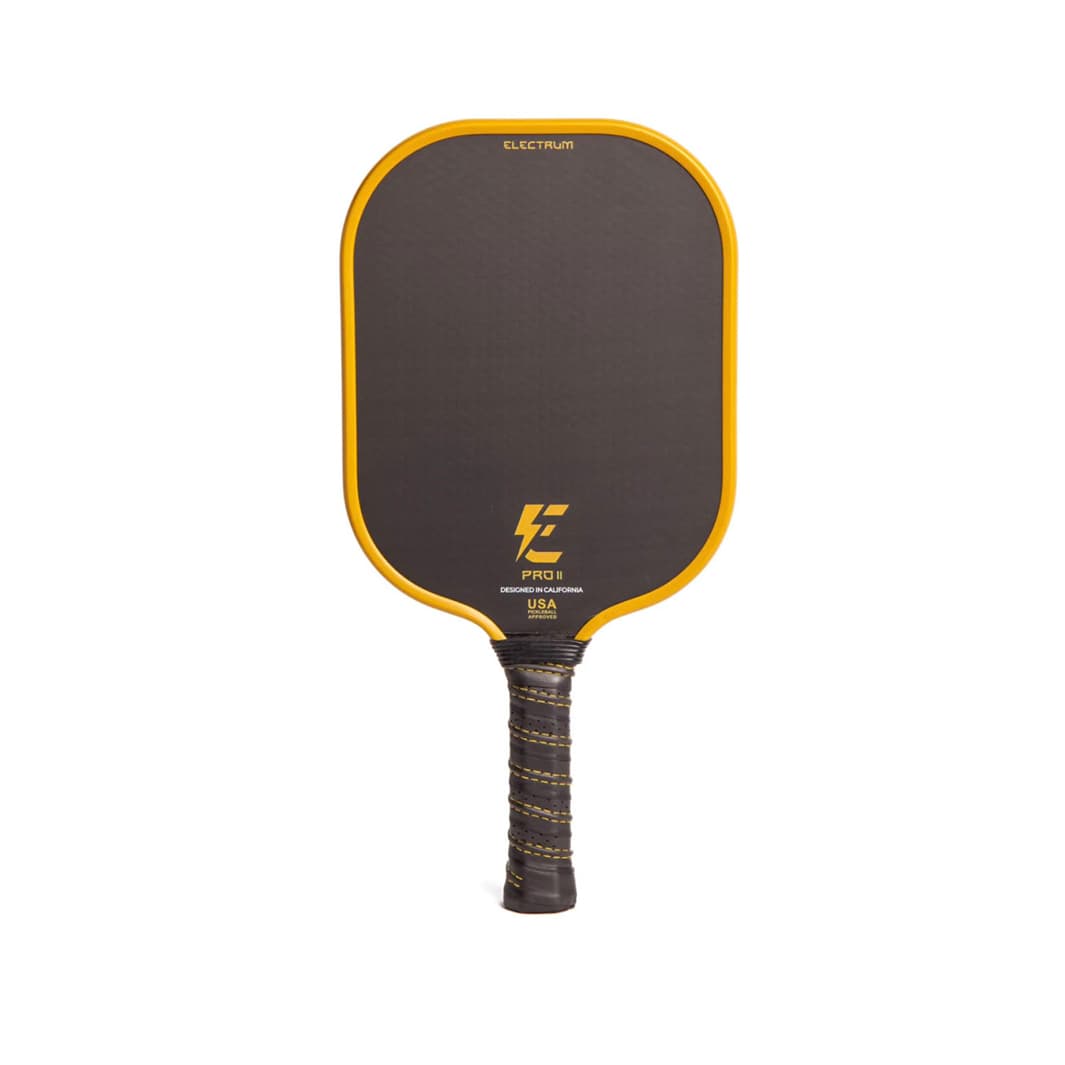
The Electrum Pro 2 pickleball paddle is an excellent choice for experienced players looking for power and control. It features an 11mm full-cell polymer core, 8-inch paddle width, 16-inch paddle length, and a 5 1/4-inch grip length. The grip circumference measures 4 1/4 inches. The paddle is balanced and slightly longer for extra reach. It also has good spin potential and control, allowing you to make accurate shots with precision.
Pros
- Polymer core for control
- Slightly longer paddle for extra reach
- Full-cell construction for superior feel and touch
- Reported to come with a paddle cover
- Roughly 5 1/4" handle length with a 4 1/4" grip circumference
Cons
- Not the lightest paddle available; reported weight is around 8.7 ounces.
- The price point is higher than some other paddles on the market.
7. Engage Pursuit Ex 6.0 Review
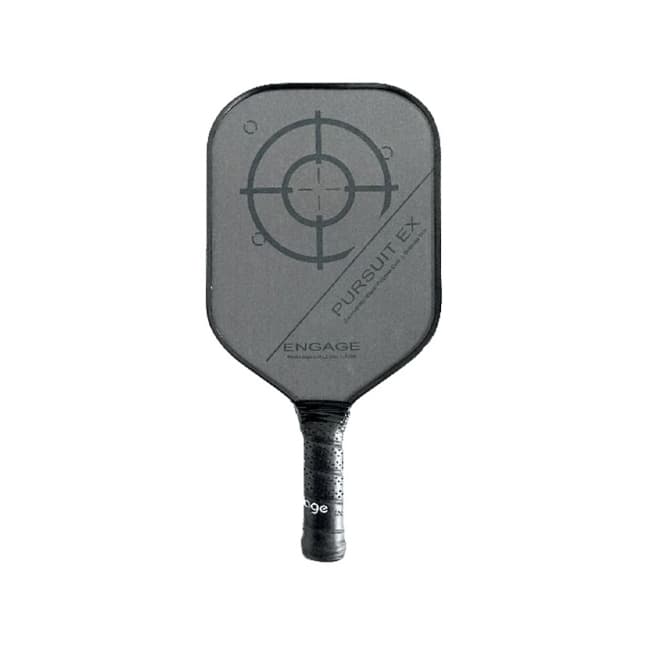
The Engage Pursuit EX 6.0 is a great pickleball paddle for anyone looking for a combination of control and power. This paddle features a proprietary graphite skin and Control Pro "Black" technology core for impressive performance. The weight range for this paddle is roughly 7.5 to 8.4 oz depending on the version (lite or standard), so you can pick the weight that best suits your playing style. It is designed to favor control, with some power.
Pros
- Pro-level combination of control and responsiveness.
- Graphite skin and polymer core for more control than power.
- Lite and standard weights available.
- Proprietary 'black' polymer core with a soft feel.
- Graphite skin gives a good amount of spin.
- Ideal for a wide range of playing styles.
Cons
- Costly - The Engage Pursuit EX 6.0 is priced at the premium end of the market.
- Weight - In the standard weight (roughly 8.0 to 8.4 oz) this paddle is heavier than many others and may be too heavy for some players; a lite version is also sold.
- Control - Some players may want even more control than this paddle offers.
- Power - The Pursuit EX 6.0 is designed for control rather than power, so some players may find it lacking in power.
8. Prokennex Black Ace Pro Review
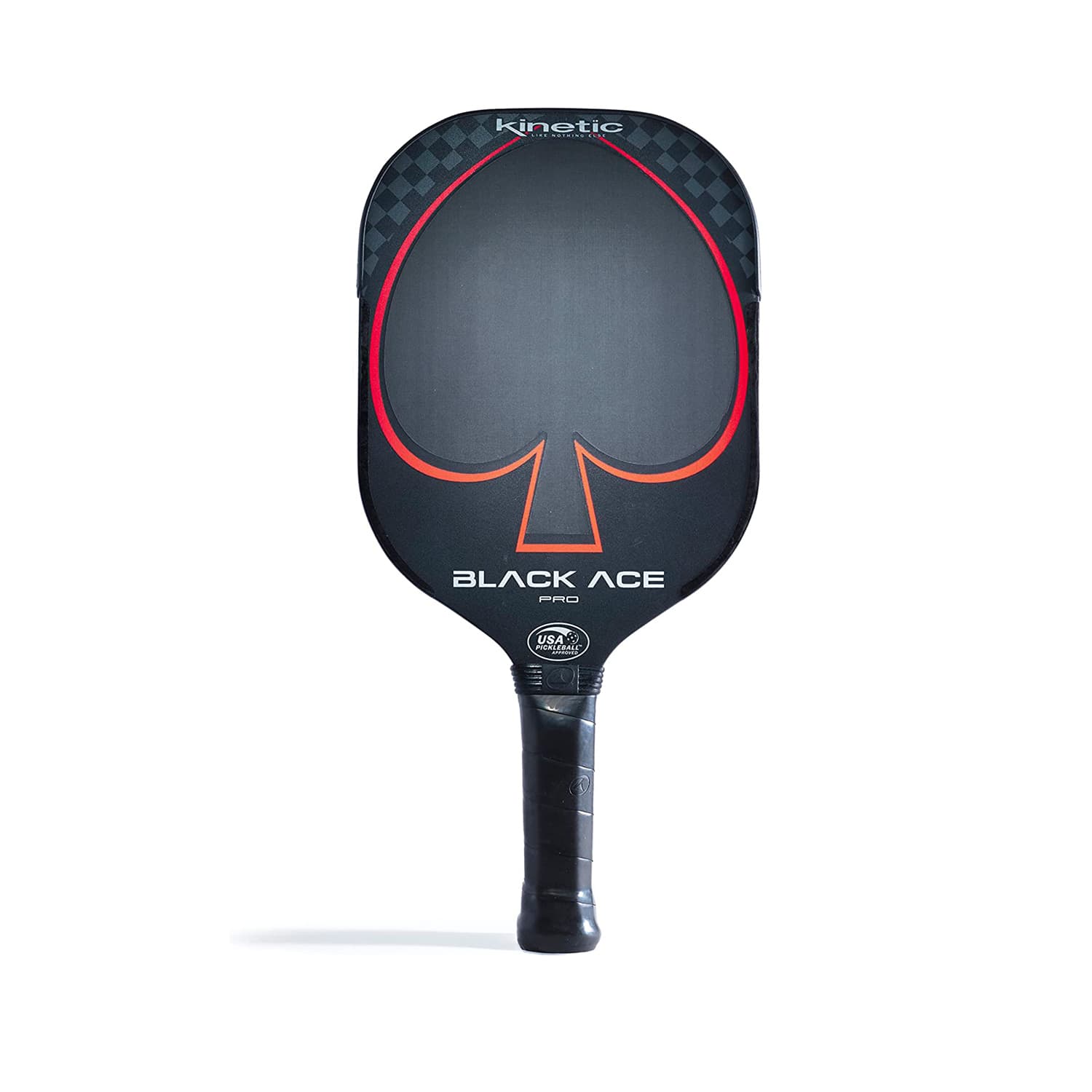
The ProKennex Black Ace Pro is an excellent choice for the modern game of tennis. Its unique TORAY textured carbon construction makes for an incredibly aerodynamic and fast paddle, and its FlexLogic technology ensures that your arm fatigue will be kept to a minimum. The Black Ace Pro also features a thin beam, smaller head size, and an open 16x19 string pattern, making it an incredibly well-balanced racquet. The 11.4 oz weight makes for an easy swing, and the 4-point head light balance ensures excellent control and maneuverability. Overall, the ProKennex Black Ace Pro is an excellent option for the modern player looking for a reliable, arm-friendly racquet.
Pros
- Highly Aerodynamic and Fastest Paddle in Your Hand
- Thinner Beam and Smaller Head Size for Optimal Power
- Proprietary FlexLogic Technology for Arm Fatigue Reduction
- Head Light Balance Point for Greater Control
- Open 16x19 String Pattern for Improved Responsiveness
- 10.8 Ounces Unstrung for Lightweight Maneuverability
Cons
- Expensive price point
- Small head size may not suit all playing styles
- The open string pattern may not offer enough control for some players
- The frame is quite stiff and may not suit players with arm and shoulder issues
9. Vatic Pro V7 16mm
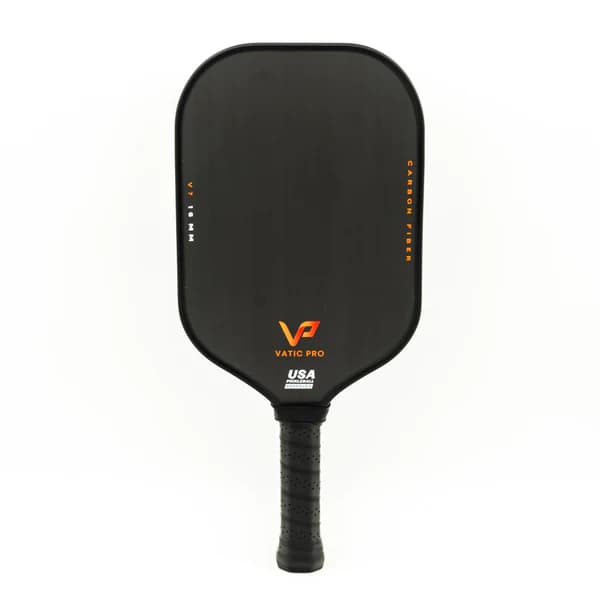
The Vatic Pro V7 16mm is a thermoformed paddle designed to give a softer feel with less pop than many power paddles. Reviewers report positive feedback on its comfort. Scratches on the surface may appear during play; these are cosmetic.
Pros
- Soft feel with less pop
- Good choice for those who don't want a bouncy paddle
- Positive feedback from users
- Cosmetic scratches do not affect its performance
- Thermoformed construction for a firm, durable build
- Less pop compared to other paddles
- Comfortable grip design
- Lightweight and easy to maneuver
- Moderately priced
Cons
- The paddle may incur scratches on the surface from collisions or accidental bumps.
- The scratches can be a cosmetic blemish, but they do not affect the performance.
- The paddle is soft, which may not be suitable for those who prefer a harder feel.
- The lack of excessive pop may not be ideal for players who rely on a more aggressive paddle.
- The paddle's design may not be visually appealing to all players.
10. Rhombus EV1.16 Paddle Review
The Rhombus EV1.16 is an edgeless paddle with a 16mm enhanced EVA foam core, from Rhombus, a small brand that also makes raw carbon fiber paddles. It measures about 16.4 x 7.4 inches, weighs roughly 8 ounces and has an octagonal handle. The EVA foam core gives a soft, plush feel and a muted, quiet sound, which may suit communities with noise restrictions. It has good spin potential from the way the core compresses, and the surface texture matters less. It needs good technique to control, especially on drives. The EV1.16 is not legal for sanctioned tournament play, so it is best for recreational games. It retailed around $180 when reviewed.
Pros
- Soft, plush feel from the EVA foam core
- Muted, quiet sound that may suit noise-restricted communities
- Powerful and able to generate a lot of speed
- Good spin potential from core compression
- 16mm core, edgeless build, roughly 8 oz
- Firm octagonal handle with no exposed polymer
Cons
- Not legal for sanctioned tournament play
- Priced high for a paddle that cannot be used in sanctioned events
- Needs good technique and aiming to control, especially on drives
- Small brand with limited options
11. Selkirk VANGUARD 2.0 Mach6 Lightweight Carbon Fiber Pickleball Paddle
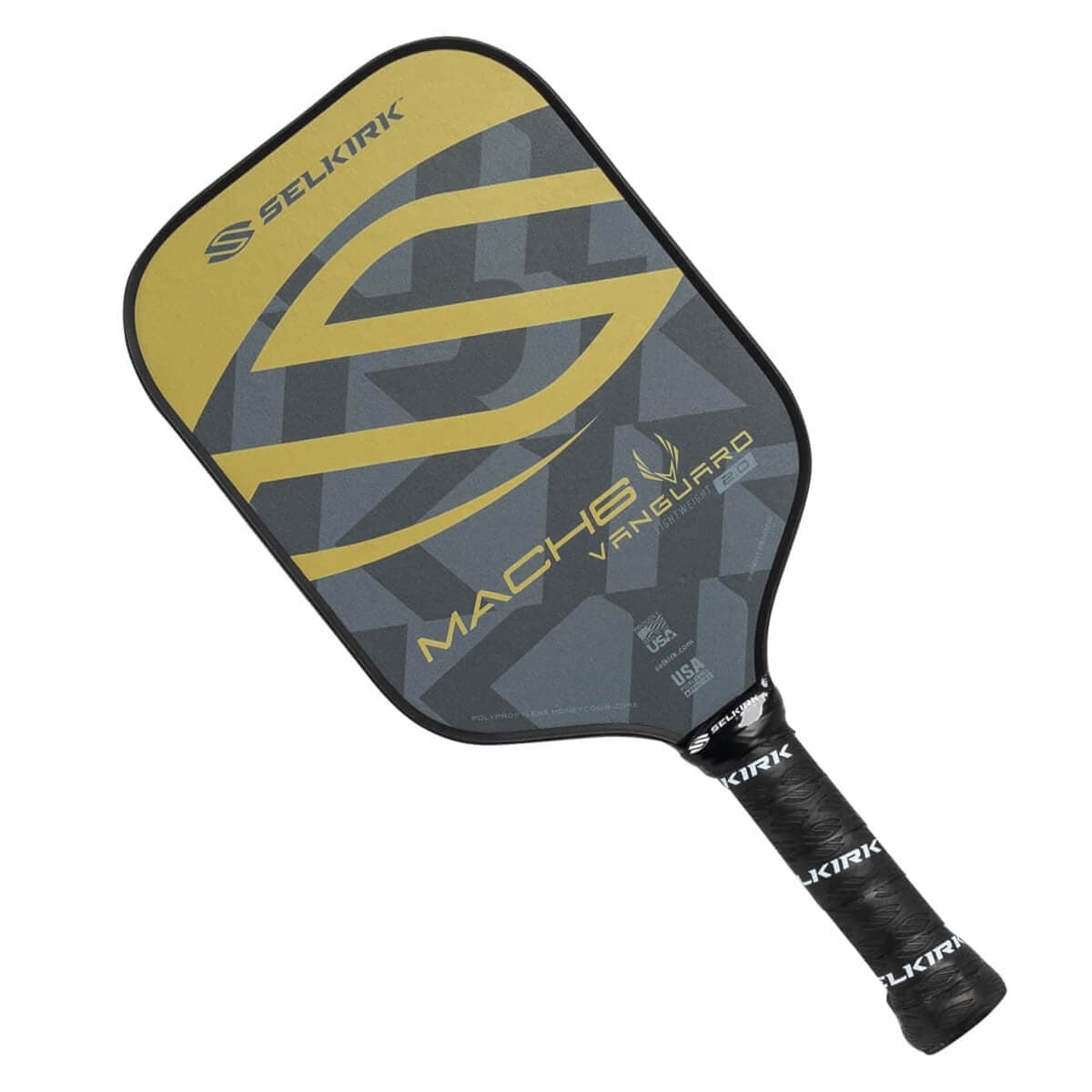
The Selkirk VANGUARD 2.0 Mach6 Lightweight Carbon Fiber Pickleball Paddle is a lightweight carbon fiber paddle aimed at quick hands. It features low-profile, lightweight and durable edge guard technology for a well-balanced and solid paddle. The paddle is designed with proprietary bi-directional, cross-weave carbon fiber technology to provide an impressive blend of power and control. Additionally, the paddle is equipped with EdgeSentry technology to provide increased stability and control. The paddle is light and easy to maneuver, making it ideal for players who want to improve their game. With its impressive features, the Selkirk VANGUARD 2.0 Mach6 Lightweight Carbon Fiber Pickleball Paddle is best suited to players who like a quick, light paddle.
Pros
- Low-profile and lightweight edge guard technology for a well-balanced and solid paddle
- Bi-directional, cross-weave carbon fiber face
- Long, slender shape
- Carbon fiber face aimed at speed and consistency
- Geared toward players looking for quicker reaction times
Cons
- Expensive compared to other paddles
- May be too light for some players
- The face is quite thin and could cause inconsistent shots
- The edge guard is not as robust as some other paddles
12. Diadem Icon v2
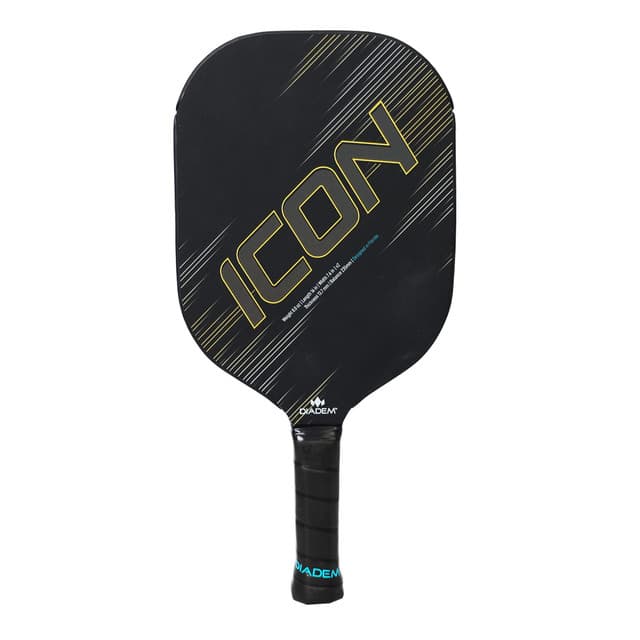
The Diadem Icon Paddle is a Diadem paddle with a three-layer construction and an elongated shape. Two honeycomb layers on the exterior and a solid center give the paddle a responsive feel and good power. The surface texture is firm rather than rubbery, balancing grip and spin. The elongated shape adds reach for overheads and drives, and the grip suits players with larger hands.
Pros
- The extended version feels a bit lighter and more airy, while still being solid
- Reviewers report good results on volleys, dinks, blocks and put-aways
- Three-layer construction for reactiveness and power with touch
- Surface texture is solid but not rubbery
- Grip feels great for larger hands, even those accustomed to larger grip sizes
- Players who like the elongated shape of the paddle should stick with it
- Adding more weight can balance out for different playing styles
- Good option for those who want a solid, powerful paddle with good touch
Cons
- Only offered in two versions: standard and extended.
- Grip size may be too small for some players' hands.
- Elongated shape may not be preferred by all players.
- Additional weight may need to be added to achieve desired balance for certain players.
- Limited color options.
- Higher price point compared to other paddles on the market.
Materials Used For Paddle Construction And Spin
Different materials are used for pickleball paddle construction, such as graphite, polymer, fiberglass, and carbon fiber, all of which have an impact on the amount of spin that can be generated.
Graphite Materials
Graphite is one of the most popular materials used for making pickleball paddles. It is a lightweight but highly durable material, which makes it ideal for players who want high-performance paddles that are easy to control. Graphite faces tend to be light and stiff, giving a crisp feel.
Graphite paddle faces are often smoother than raw carbon fiber, so spin comes more from a light surface texture and swing speed. Overall, if you're looking for a light, responsive paddle, graphite is a good choice.
Polymer Materials
Polymer materials are commonly used in the construction of pickleball paddles for their lightweight and durable properties. These synthetic materials are often used as part of the core or surface layers of the paddle, providing a combination of strength and flexibility. Examples include polypropylene, polycarbonate, and nylon.
The quality of the polymer used in a paddle's core is an important consideration when choosing a pickleball paddle. Polymer (polypropylene honeycomb) cores are the most common core in modern paddles, and they usually give a softer, quieter feel than other core materials.
Manufacturing processes for polymer-based paddles involve using resin matrix composites that allow precise control over mechanical properties like stiffness, impact resistance, and tensile strength.
Fiberglass Materials
Fiberglass materials are commonly used in pickleball paddle construction for their durability and lightweight properties. These materials are often combined with other materials such as carbon fiber, polymer, or graphite to create a high-performing paddle that can generate spin on the ball. Fiberglass is especially popular in composite paddles because of its ability to add stiffness and strength without adding too much weight.
One advantage of using fiberglass materials in pickleball paddles is that they tend to be more affordable than other advanced materials like carbon fiber or graphite. This makes them a good option for beginner or intermediate players who want a quality paddle without breaking the bank. However, it's important to note that not all fiberglass paddles are created equal - some may have lower quality fibers or construction that could affect performance.
Overall, fiberglass materials play an important role in creating top-performing pickleball paddles built for generating spin on the ball. When looking at different options for your next paddle purchase, be sure to consider what type of player you are and how important spin is to your game before making a decision on which material is right for you.
Carbon Fiber Materials
Carbon fiber is a highly popular material used in pickleball paddle construction. Its stiffness, durability, and lightweight make it an ideal option for players who want to maximize their shotmaking abilities. Raw carbon fiber faces have a gritty surface that grips the ball, which is why they are popular with spin-oriented players.
Other materials commonly used in pickleball paddles include graphite, fiberglass, composite materials, and hybrid options. While each material has its individual strengths and weaknesses when it comes to shot power, performance and flexibility- carbon fiber remains one of the top choices among advanced players due to its strength and stiffness. If you're looking for a paddle that delivers superior spin rates while still being lightweight enough to handle quick movements on court - consider investing in a carbon fiber model for your next game!
Factors Affecting Spin In Pickleball Paddles
The weight, grip size and shape, balance point, edge guard, and paddle shape are all crucial factors that affect the spin of a pickleball paddle - read on to learn more about how these elements can impact your game.
Weight Of The Paddle
The weight of a pickleball paddle is an important consideration when it comes to choosing the right equipment for your game. Lighter paddles are easier to maneuver, which can be beneficial for players who prefer quick and precise movements on the court. However, heavier paddles generate more momentum and power behind each shot, making them a popular choice among players who want to hit harder.
When it comes to spin in pickleball, the weight of your paddle can affect your ability to control this aspect of your game. A lighter weight may make it easier to execute certain types of spins with accuracy and consistency, while a heavier weight may increase the potential power and effect of those same spins. Ultimately, finding the right balance between weight and other factors such as grip size and shape will help you achieve optimal performance on the court.
Grip Size And Shape
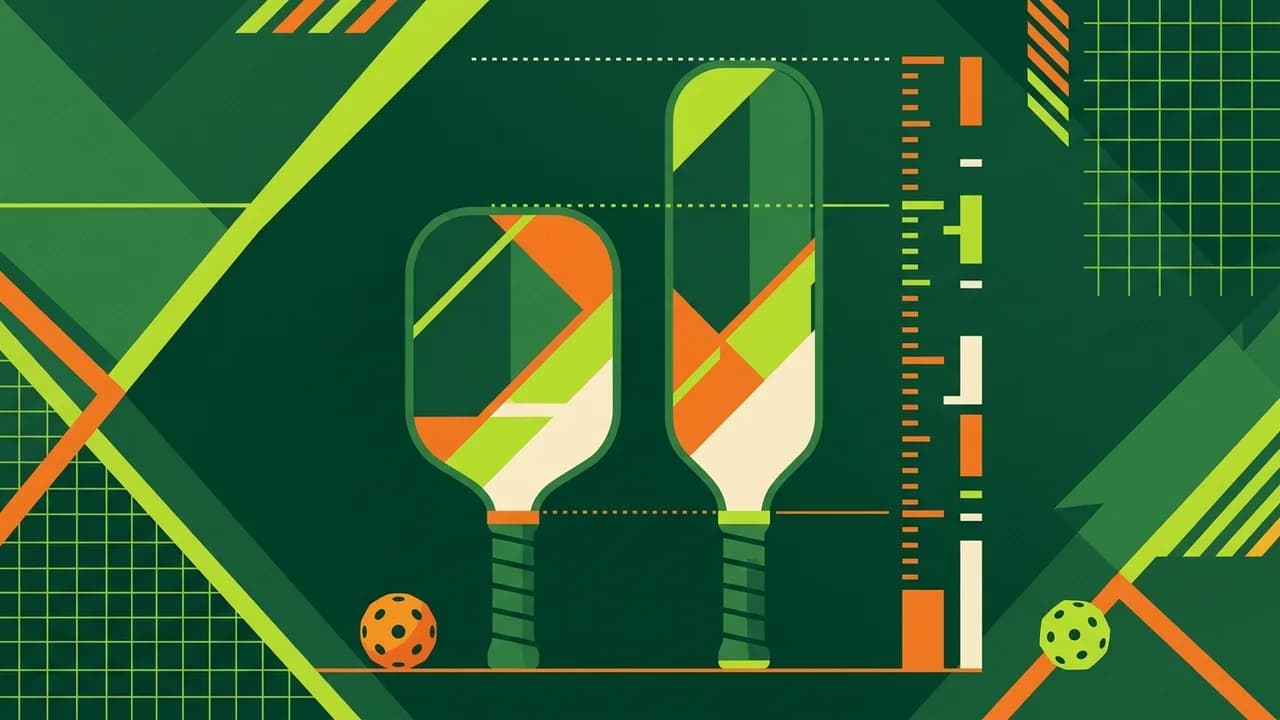
The grip size and shape of a pickleball paddle play a significant role in generating spin. A longer handle gives more leverage and room for a two-handed backhand, while grip circumference (typically 4 to 4.5 inches) affects comfort and wrist action. Grip shapes vary from rectangular to round and even contoured models designed for specific hand sizes or preferences. Ensuring that you have the right sized grip that fits your hand comfortably can help improve your overall control of the paddle.
Similarly, paddle shape is equally essential in determining spin rate. Elongated shapes add reach and leverage, but they have a smaller sweet spot, so they should be chosen with care. Ultimately choosing a paddle with both an appropriate-sized grip and preferred shape will help players achieve better results on their spins while maintaining comfort throughout their games.
Balance Point Of The Paddle
The balance point of a pickleball paddle is a crucial factor that determines the spin potential of your shots. It refers to the distribution of weight in the paddle, and finding the right balance point can give you an edge on the court. A higher balance point towards the head of the paddle means more power and less control, while a lower one towards the handle provides more control but less power. For players seeking high-spin potential, it's best to look for paddles with a balanced center or slightly higher balance points as they offer both power and precision.
Factors like weight, shape, and grip size affect the balance point of your paddle. Head-light paddles feel quicker and easier to control, while head-heavy paddles carry more momentum through the swing and add power, at the cost of maneuverability.
Edge Guard And Paddle Shape
The shape and edge guard of a pickleball paddle can greatly impact its spin capabilities. Paddle shape affects reach, sweet spot size and power. The edge guard mainly protects the paddle and adds some weight to the perimeter; it does not create spin. It's important to consider both the shape and edge guard when choosing a paddle that will help you achieve your desired level of spin.
For example, some paddles feature elongated shapes that provide more surface area for contacting the ball during topspin shots. Others may have shorter widths or tapered ends that allow players to easily generate sidespin shots from various positions on court. Ultimately, finding a paddle with the right combination of shape and edge guard design can help take your game to new heights in terms of accuracy, comfort, and overall performance on court.
How Handle Length Affects Pickleball Spin
A crucial aspect of pickleball that impacts these factors is the handle length of the paddle.
This section will discuss how a longer handle affects the spin potential in pickleball and its influence on power output.
Longer Handles and Spin Potential
A longer handle on a pickleball paddle can add leverage, which helps some players generate swing speed and therefore spin. When a player swings the paddle, the additional length increases the distance from the hand to the paddle's head, creating more leverage. This added leverage can increase swing speed and, with a textured face, spin.
Longer handles also allow a two-handed grip, which some players use to add topspin on their backhand.
Power Output with Longer Handles
In addition to spin potential, a longer handle on a pickleball paddle also contributes to an increased power output. The additional leverage provided by the longer handle enables players to generate more force when striking the ball. This force translates to greater power, allowing players to hit harder and faster shots.
Powerful shots are advantageous in pickleball, as they can put opponents on the defensive, force errors, or result in outright winners. A longer handle, therefore, not only improves spin potential but also enhances the overall effectiveness of a player's offensive game.
Balancing Power and Control
While longer handles in pickleball paddles can increase power and spin, it is essential to find the right balance between these benefits and maintaining control over shots.
A paddle with a longer handle may make it more challenging to control the ball, especially during delicate touch shots, such as dinks and drop shots. Also long handles slows down hand speed during hand battles volleys at the kitchen.
Players should carefully consider their playing style and skill level when selecting a paddle with a longer handle.
Different Types Of Spin In Pickleball
There are three main types of spin in pickleball: topspin, backspin, and sidespin.
Topspin
Topspin is a type of spin that creates forward rotation on the ball, causing it to drop quickly over the net and dip sharply toward the opposing player. It's an effective technique for hitting deep shots with power and accuracy. To hit a topspin shot in pickleball, you need to brush up on the back of the ball using a slightly closed paddle face. This will create topspin as the ball moves through the air.
Using topspin can be especially effective when serving in pickleball. Topspin serves are legal as long as the spin comes from the paddle strike: under USA Pickleball rules the server may not manipulate the ball or add spin by hand when releasing it, and the serve must follow the underhand and contact rules. Check the current rulebook for details. With some practice and experimentation, you'll start seeing great results with this technique!
Backspin
Backspin (slice) is one of the main types of spin in pickleball. When a player hits the ball with backspin, the ball rotates backward, which keeps it low and slows it down after the bounce. This can make it harder for your opponent to attack your shot, and it can help you control the ball.
To use backspin in Pickleball, players need to hit under or below the center of the ball, causing it to rotate backwards. Players often use backhand strokes when attempting this technique as they have more control over their wrist movement. It's important not to use too much force on this type of spin since that could cause an error in shot placement.
Players who want to improve their ability with backspin should practice regularly and focus on developing good stroke mechanics. Additionally, choosing a paddle with a surface designed for producing spin is crucial—you want one that has rough texture or composite materials suitable for generating more rotation on your shots. By utilizing backspin effectively during play, you'll raise your skill level and become a tough competitor on any court!
Sidespin
Sidespin is a type of spin used in pickleball to change the direction of the ball during play. It can be achieved by hitting the ball with a paddle that has a textured surface, which grips the ball and creates a sideways motion. Sidespin can be useful when trying to deceive your opponent or hit shots beyond their reach. However, it requires practice and skill to execute accurately.
When choosing a pickleball paddle for sidespin, consider paddles with textured surfaces such as composite or hybrid materials. These types of paddles create more friction between the surface and ball, making it easier to generate sidespin. Additionally, look for paddles with an edge guard that prevents damage from repeated hits on the frame edges. Overall, mastering sidespin gives you an extra advantage on court and increases your chances of winning points against opponents who are not prepared for this technique.
How To Choose The Best Paddle For Spin
To choose the best pickleball paddle for spin, buyers should determine their playing style and needs, test out different paddle types and spin, consider their skill level and goals, and look for a paddle with advanced spin technology.
Determine Your Playing Style And Needs
To choose the best pickleball paddle for spin, it's important to determine your playing style and needs. Here are some things to consider:
1. Your level of experience: Are you a beginner or an advanced player? This will affect the type of paddle you need.
2. Playing frequency: Do you play occasionally or regularly? More frequent players may want to invest in a higher quality paddle.
3. Control vs. Power: What is your primary goal – more control or more power? This will determine the weight and balance point of your paddle.
4. Comfort: Do you have any joint issues or injuries? Lighter paddles (under about 7.3 ounces) may feel easier on the arm, but if you have joint pain or an injury, talk to a doctor or physical therapist.
5. Maneuverability: How do you like to move on the court? Players who like to be quick and agile may prefer a lightweight, smaller-sized paddle.
6. Ball control: How important is ball control for your gameplay style?
Taking all these factors into account will help you choose the best pickleball paddle for spin based on your playing style and needs.
Test Out Different Paddle Types And Spin
To choose the best pickleball paddle for spin, it is important to test out different paddle types and spins. You can borrow or rent paddles from other players or your local court to try out different materials, shapes, sizes, and surfaces. It's also a good idea to practice different types of spin with each paddle you try to determine which one works best for you. For example, if you prefer topspin shots over backspin shots, look for paddles that offer more surface texture or composite materials.
When testing out paddles and spin, consider your skill level and goals. Are you a beginner looking for more control and feel before adding spin? Or are you an advanced player seeking power and technique? Your playing style should also influence your choice of paddle based on factors such as weight distribution, grip size and shape, edge guard protection design etc. Ultimately it's about finding the right balance between power versus control versus spin based on your individual needs in order to play at optimal performance levels.
Consider Your Skill Level And Goals
When choosing a pickleball paddle for spin, it's important to take into account your skill level and goals. Here are some things to consider:
1. Beginner players may benefit from a lighter paddle for increased maneuverability and reduced stress on their elbows and shoulders.
2. Intermediate players may want to look for paddles with a thicker core to absorb impact and improve accuracy.
3. Advanced players may prefer paddles with specific shape features that cater to their individual playing style.
4. Determine what type of spin you want to focus on (topspin, backspin or sidespin) and choose a paddle that will complement your skillset.
5. Consider comfort as well – if you plan on playing for extended periods, you'll need a paddle that is comfortable to hold and won't cause fatigue.
By taking these factors into consideration when selecting your pickleball paddle for spin, you can ensure that you find the perfect one for your skill level and goals.
Look For Paddle With Spin Technology
One key aspect to consider when choosing a pickleball paddle for spin is the technology behind it. Paddles with specialized spin technology can enhance your game and help you achieve more controlled shots on the court. For example, some paddles feature textured surfaces that generate more spin, while others have specific core materials designed to improve ball contact and reduce vibrations. Additionally, edge guards and sweet spots can also affect the amount of spin produced by your paddle.
Maintenance And Care Tips For Pickleball Paddles For Spin
To keep your pickleball paddle in good condition for optimal spin performance, make sure to clean it regularly with a damp cloth and mild detergent, avoid storing it in extreme temperatures or direct sunlight, replace worn-out grips or edge guards promptly, and monitor the paddle's condition regularly to prevent any structural damage.
Clean Your Paddle Regularly
Proper care and maintenance of your pickleball paddle is essential for its longevity and spin performance on the court. Here are some tips for cleaning your paddle regularly:
1. After every game or practice, use a clean, damp, and lint-free cloth to wipe off the surface of your paddle.
2. Avoid harsh household cleaners or submerging the paddle in water, as it can damage the surface or the grip.
3. To remove dirt or grime buildup, use a damp cloth with a little mild soap.
4. Gently scrub the surface of the paddle with a soft brush or cloth to remove any stubborn stains.
5. Rinse off any soap residue with clean water and dry your paddle thoroughly with a towel before storing it.
Proper care and maintenance of your pickleball paddle can enhance its performance, spin, accuracy, and overall longevity on the court.
Store Your Paddle Properly
Proper storage of your pickleball paddle is crucial to keep it in good condition and prolong its lifespan. To store your paddle properly, make sure to keep it away from extreme temperatures or moisture that can damage the surface or warp the shape. It's also best to avoid leaving your paddle in direct sunlight for too long, as this can cause fading and discoloration.
When storing your pickleball paddle, consider investing in a protective cover or case that will shield it from dust and scratches while keeping it upright. This will also help prevent accidental drops during transport or storage. By taking care of your equipment and storing it correctly between games, you'll be able to enjoy better performance on the court without having to frequently replace worn-out paddles.
Avoid Overusing Your Paddle
To prolong the life of your pickleball paddle for spin and ensure optimal performance, it's important to avoid overusing it. Here are some tips to help you take good care of your paddle:
1. Do not play with a damaged or cracked paddle as it can affect spin control and potentially cause injury. Replace your paddle when needed.
2. Limit your playing time to avoid overusing your paddle. Taking breaks in between games or sessions can also help prevent fatigue and injury.
3. Avoid hitting hard surfaces, such as the court surface or walls, with your paddle as it can damage the surface layer and reduce spin capability.
4. Store your paddle properly in a protective case when not in use to prevent unnecessary wear and tear.
5. Clean your paddle after each game using a mild soap and warm water solution. Avoid using harsh chemicals that can damage or fade the surface layer.
6. Monitor the condition of your grip regularly to ensure that it provides adequate traction without being too stretched out or worn down.
By following these care tips and avoiding overuse, you can extend the lifespan of your pickleball paddle for spin while maintaining optimal performance on the court.
Monitor Your Paddle's Condition
To ensure the longevity and optimal performance of your pickleball paddle, it's essential to monitor its condition regularly. Look out for any visible signs of wear and tear on the paddle surface or handle, such as chips or cracks, which could affect spin control and grip style. It's also crucial to check if the weight distribution is balanced across the entire paddle to prevent any strain on your wrist during play.
Another critical factor is monitoring the edge guard because this affects not only the durability but also the power potential of your paddle. If you notice any damage or looseness in your edge guard, it may be time to replace it since this can cause severe harm during gameplay. By staying vigilant about these aspects and taking proactive maintenance measures like regular cleaning, storing properly after use, and avoiding overuse, you'll keep your pickleball paddle in top-notch condition for years to come.
Replace Your Paddle When Needed
If you want to optimize the spin and control of your shot, choosing the right pickleball paddle is essential. However, it's important to remember that even the highest quality paddles wear out over time. To ensure optimal performance, you should replace your paddle when needed. Here are some key signs that indicate it's time for a new pickleball paddle:
1. Structural Damage: If your paddle has any cracks in the face or handle, it's time for a replacement.
2. Loss of Pop: If you've noticed that your shots have lost their power, it could be due to a worn-out sweet spot.
3. Edge Guard Damage: The edge guard on a paddle helps protect it from damage during play. If this part is damaged or missing, your paddle is more likely to break.
4. Frequent Mis-hits: When you start consistently missing the sweet spot of your paddle, resulting in poor shot placement and control, it might be time for an upgrade.
5. Deteriorating Grip: A good grip on the paddle is essential for comfort and control during play. If the grip has become worn or sticky, replacing it could be necessary.
By keeping an eye out for these common signs of wear and tear, you can make sure you're always playing with equipment that performs at its best level and maximize your chances of winning games with ease!
Benefits Of Using A Spin-Focused Paddle And Conclusion
In conclusion, choosing the right pickleball paddle for spin is essential to enhance your gameplay and improve your shot-making abilities. By understanding how different materials, surface textures, and paddle shapes affect spin, you can make an informed decision that suits your playing style and skill level. A spin-focused paddle can help with ball control and shot shape, though spin depends mostly on technique and swing speed. Check USA Pickleball's current approved paddle list if you play sanctioned events. With our guide and recommendations of the best pickleball paddles available in the market, you're well on your way to becoming a formidable opponent on the court. Try a few paddles if you can, and choose the one that suits your game.