Pickleball Etiquette at Open Play: The Unwritten Rules
Open play is where most people play pickleball, and it runs on shared habits more than written rules. Nobody hands you a rulebook when you arrive at the courts. If you are new, or if you just moved to a new area, this guide covers the customs that keep games friendly. Local habits vary from one facility to the next, so treat these as common practice and follow whatever the regulars at your courts do. If you are still looking for somewhere to play, our court finder and our guide to finding players near you are good places to start.
Before the game
- Learn how the court rotation works. Many places use paddle racks, a sign-up board or an app to line up the next players. Ask someone before you put your paddle down, because the system differs from site to site.
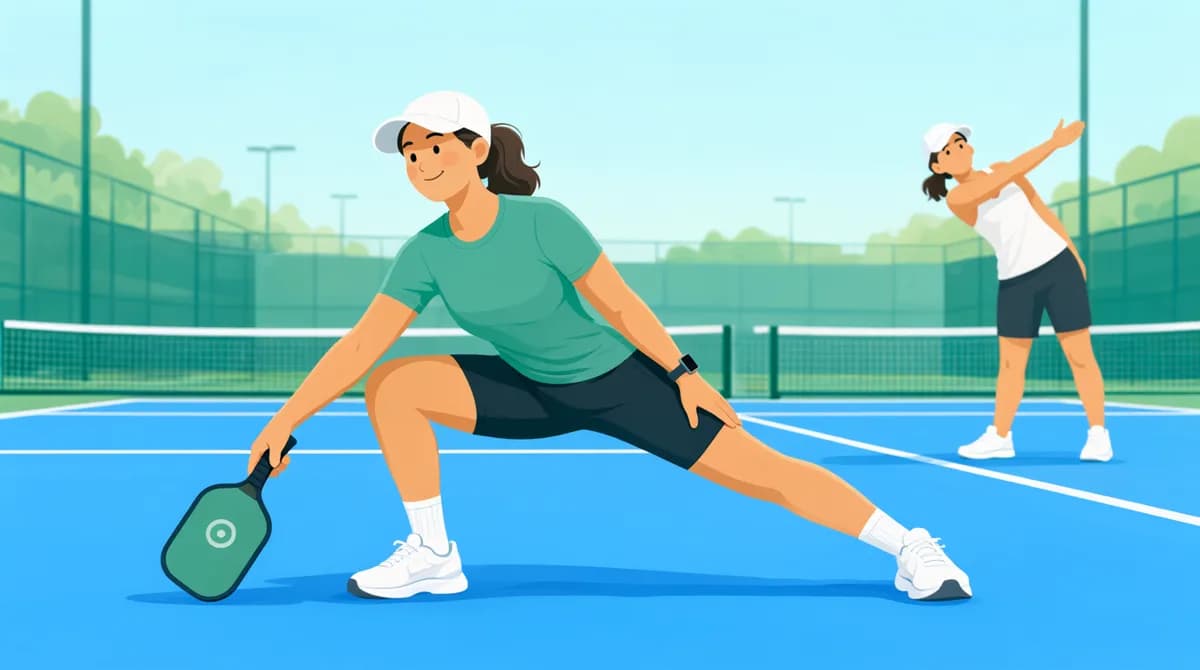
- Warm up before you start, not during. A few rallies and some practice serves are normal. Hitting hard drives at the opponents while they are still setting up is not.
- Introduce yourself and agree on the basics. A quick hello, plus a check on who is serving first, avoids most early arguments. If you are a beginner, say so. Most players will adjust and be glad you told them.
Calling the score and the lines
- The server calls the score before every serve. In doubles that is three numbers: your score, their score, and whether you are the first or second server. Say it loud enough for everyone to hear. Calling it clearly stops most disputes about who is serving. Our rules of pickleball post explains the numbers.
- Call the lines on your own side of the net. You are best placed to see where a ball lands near you. Make the call quickly, then say it clearly: "out" or "good". Do not argue calls on the other team's side.
- If you are not sure, the ball is in. The official rules say a ball cannot be called out unless a player can clearly see space between the ball and the line. A ball that touches any part of the line is in. For a refresher on what counts, see our guide to inbound and outbound calls.
- Give a close call to your opponents. Players who regularly give the benefit of the doubt earn a reputation that makes every game easier.
- Own your own mistakes. If the ball hits your body or clothing, or you touch the net, say so yourself. Our post on what happens when the ball hits you covers the rule.
During the rally
- Stop play when a ball rolls onto your court. Call "ball on court" or "ball" and replay the point. This is for safety, and most players expect it. Pause the rally even if you could win the point. Our guide to what a let is explains replayed points.
- Return stray balls gently. Hand them back or roll them toward the court. Do not hit them back into the middle of a point.
- Be careful about hitting at a body. It is legal to hit the ball at an opponent, and many players do it on purpose in fast exchanges. But when you are in a casual game, aiming at a face or at someone who has clearly lost their balance is poor form.
- Warn people near you. If a ball is heading toward someone who is not watching, or if you need to cross behind another court, call it out. A quick "heads up" prevents injuries.
- Keep the comments positive. A "nice shot" to your opponents costs nothing. Skip the sighs, paddle taps and eye rolls at your partner. Do not coach a partner or an opponent unless they ask.
After the game
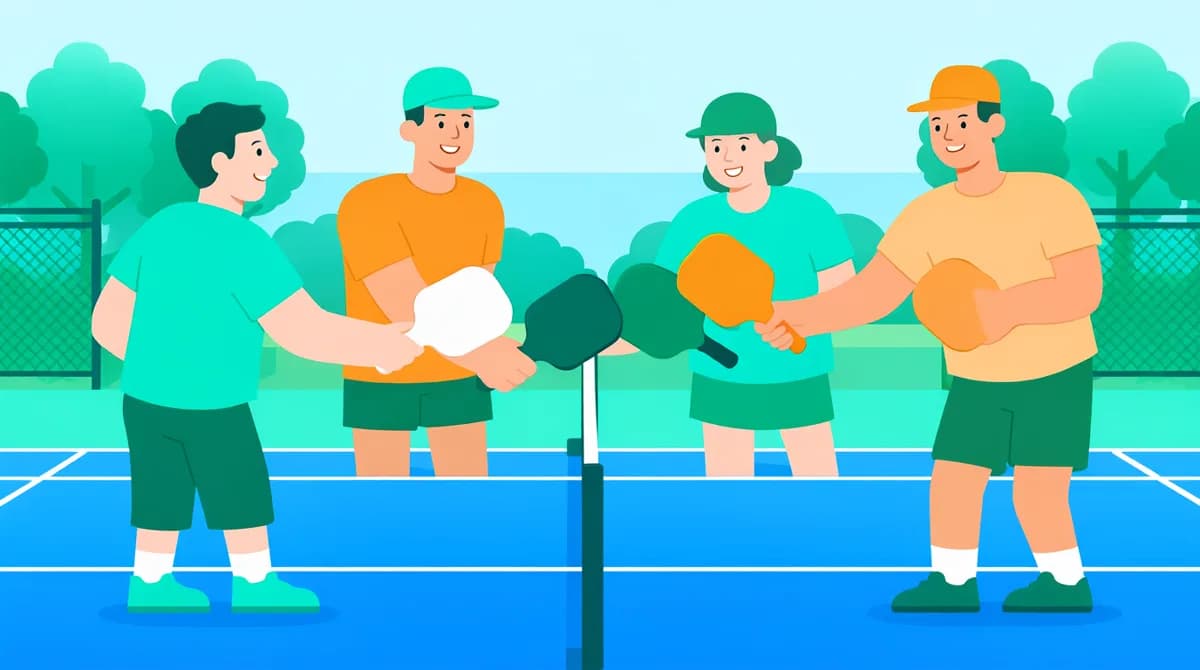
- Meet at the net. Tap paddles or say "good game" to everyone. This is one of the oldest habits in the sport and it works.
- Clear the court promptly. Take your things, return the balls and let the next group on. If you have a conversation to finish, finish it off the court.
- Invite new players in. If a group is forming and someone is standing around, ask them to join. Most regulars remember the first time they walked into a busy court.
Things to avoid
| Habit | Why it causes trouble |
|---|---|
| Not calling the score | Both teams lose track of who serves |
| Calling lines on the opponents' side | You see the ball from a worse angle than they do |
| Walking behind a live court | It is a distraction and an injury risk |
| Taking over a court without asking | Others have been waiting their turn |
The short version
Call the score, call your own lines, give close balls to the other side, stop play for stray balls, and be kind to newer players. If you are not sure what a court expects, ask. Players are usually happy to explain, and that is the best way to learn. For the language you will hear at the courts, our pickleball glossary explains the common terms.