Serve or Return: Which Rallies Are Worth More in Pickleball?
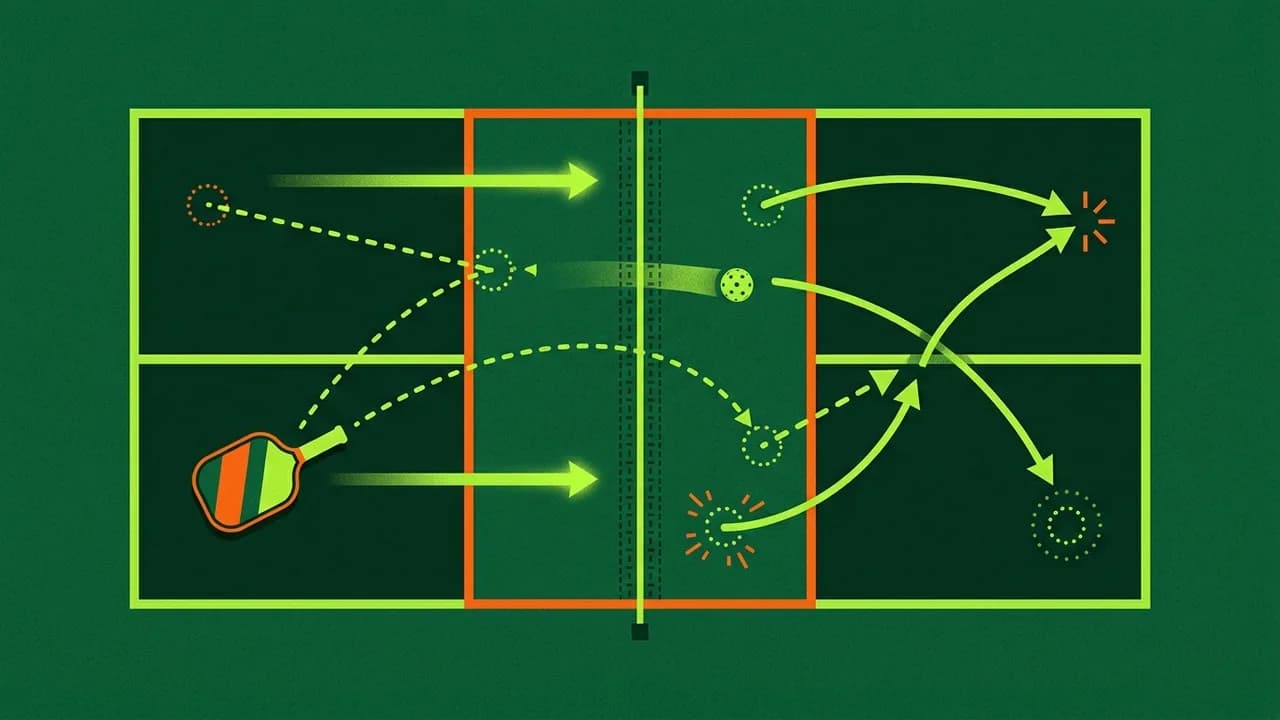
Most players think of a rally as a coin flip with a slight edge to whoever is stronger. In side-out scoring, that picture hides something useful: you can only score when you serve, so the rallies you play as server and the rallies you play as returner do different jobs. We ran the numbers to see how much each one is worth.
The model
We simulated doubles games under traditional side-out scoring: games to 11, win by 2, two servers per side, and only one server on the opening serve. Every rally is independent, and each team has a fixed chance of winning a rally when it serves. We ran 100,000 games for each matchup and alternated which team served first, so neither side got a built-in edge. The results are accurate to about half a percentage point.
This is a simplification. Real rallies are not independent, fatigue and pressure change the odds, and serve-win rates differ by player. But a simple model shows the structure of the game clearly, which is the point.
Small edges turn into big win rates
Take two evenly matched teams who each win 60% of the rallies they serve. They win exactly half their games, as you would expect. Now improve one team's serve-win rate and leave the other alone:
| Your serve-win rate | Opponent's serve-win rate | Your chance to win the game |
|---|---|---|
| 60% | 60% | 50% |
| 62% | 60% | 55% |
| 65% | 60% | 62% |
| 70% | 60% | 73% |
Two extra rallies won per hundred served is worth five points of game-win probability. Five extra is worth twelve. A game to 11 is short, and a short game with a scoring bottleneck magnifies every small advantage.
Breaking serve is worth as much as holding it
Now flip it. Keep your own serve-win rate fixed and make it harder for the other team to hold theirs:
| Your serve-win rate | Opponent's serve-win rate | Your chance to win the game |
|---|---|---|
| 60% | 60% | 50% |
| 60% | 55% | 62% |
| 65% | 55% | 73% |
Cutting the opponent's serve-win rate by five points moves you from 50% to 62%. That is the same size of gain as raising your own by five points. In plain terms, a returner who wins an extra rally is worth about as much as a server who wins one. Many recreational players spend their practice time on serves and treat the return as a way to get the ball back. The numbers say the return deserves equal attention.
What this means for how you practice
- Value your return as much as your serve. A deep, safe return gives your team time to get to the net, and it protects you from the rally you cannot afford to lose. Our guide to return of serve covers the options.
- Do not give away serves. A service fault costs you the same as losing the rally. Our post on the pickleball serve has a simple routine for staying consistent. For how serving works in doubles, read the role of the server.
- Protect the first rally after a side out. The team that just won serve has the third shot to play. Whether you choose a third shot drop or a drive, the goal is the same: win the rally that decides whether your serve survives.
- Judge yourself by rally-win rate when serving and when returning. If you track a few games, the split tells you where to practice. A lopsided split points to the part of your game worth fixing first.
Where the model breaks down
Rally results are linked. A team that is losing confidence on serve often loses confidence on return too, and a strong net game lifts both numbers at once. Opponents also adapt, so a serve that works for ten points may stop working. And rally-win rates are hard to measure from a handful of games, so treat any single game as noisy. Use the table as a guide to what matters, not as a prediction for tonight's match.
If you want to see how rating gaps translate into win chances in another way, try our win percentage calculator. And if some of the terms above are new, the pickleball glossary explains them in plain English.
The takeaway
In a game to 11, a few extra rallies won per hundred is the difference between a coin flip and a clear favourite. The advantage is just as likely to come from your returns as from your serve. Next time you practice, split your time between the two.