USA vs Canada at the MLP Nations Cup: Match Review and Key Moments
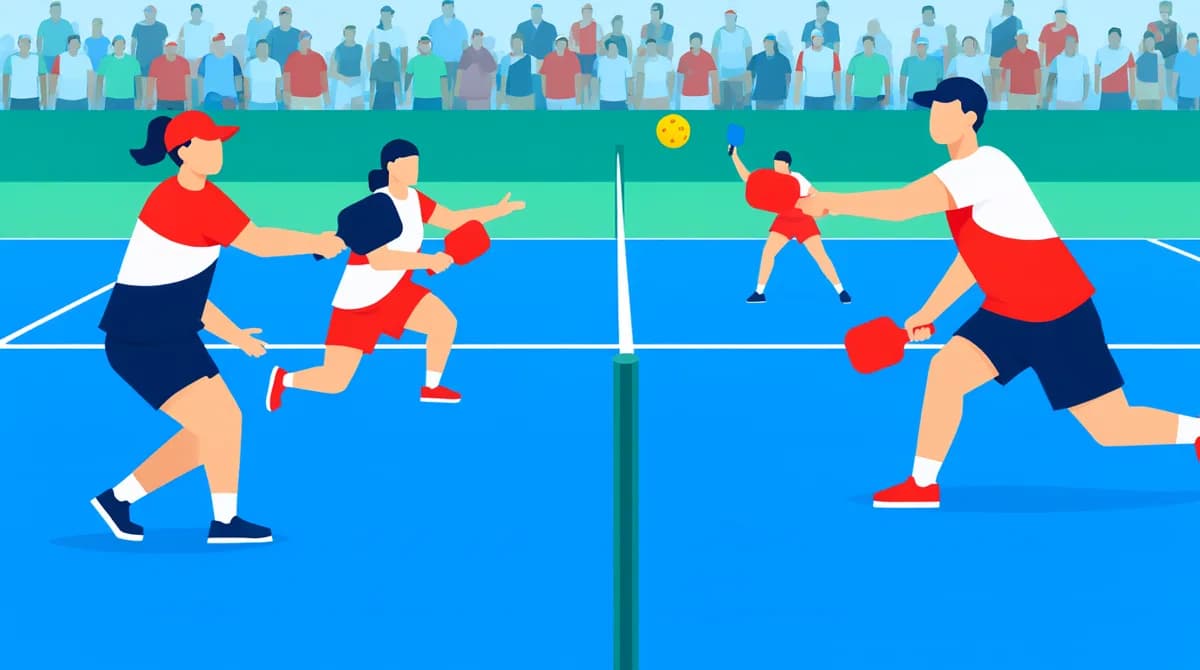
Team USA opened its MLP Nations Cup campaign against Canada in Group A on Friday, October 30, and it did not start the way the roster suggested. Canada's women won the first game, then the US took the next three. The group standings after Day 1 confirm the result: the United States was 1-0 and Canada 0-2. This review follows the full broadcast game by game, with clips, and says plainly where I am reading the commentary rather than a box score.
The match in four games
| Game | What the broadcast shows |
|---|---|
| 1 (women's doubles) | Canada wins 11-5 over Team USA's women |
| 2 (men's doubles) | The US evens the match at 1-1, with the commentators calling game point at 10-4 |
| 3 (mixed) | The US wins 11-0 after a long run of points |
| 4 (mixed) | The US closes the match, with Ben Johns the center of the highlights |
The match finished 3-1 to the US. Game scores for games 2 and 4 come from the commentary's score calls, not an official stats page, so treat them as approximate.
Game 1: Canada's women set the tone
The commentators spent the first minutes asking whether Team USA had nerves. This was the first time several of its players wore the national colors, and quick starts matter in an 11-point game. Canada took a 3-0 lead on the first serve and the US pulled back to tie the game at five. After that, the game turned on errors. The broadcast pointed to unforced errors from the US side, including a missed two-handed backhand where the commentators said the player did not swing through, and Canada closed it out 11-5.
The lesson is simple and applies to any club game. In short games, a team that is two or three points behind early has less time to settle in. Canada's women made the first points count and the US was chasing from there. For more on rally patterns that hold up under pressure, see our post on which rallies are worth more.
Game 2: the men reset the match
The broadcast noted that Canada had won 10 straight points across the end of game 1 and the start of game 2. Then the US ran off four in a row to make it 4-2 and never looked back. Two points stood out. First, the commentators contrasted the reach of the taller US player, who can hold the middle and use his wingspan to pick off balls, with Canada's more compact style. Second, they flagged the middle of the court as a source of confusion between partners, an issue they said they would examine further later in the week. If you have ever lost a point when both players left a ball, our poaching guide covers who should take it.
Ben Johns closed the game with an off-speed ball that ended with the commentators calling it a walk-off, and the match was level at 1-1.
Game 3: targeting the weaker side
This was the clearest tactical story. The commentary noted that Team USA kept sending balls to Canada's Ryan Torresin, who was sitting heavily on the backhand side, and that he was a good option for finishing points and returning. The same pattern showed up in the commentators' description of Tyra Black's returns and third shots: the US found the opening each time Canada moved to cover. The result was a one-sided game that ended 11-0. The commentators also noted that Black was playing with a fractured right index finger, which makes the performance more notable.
This is the same idea we covered in our guide to returning serve: find the opponent's less comfortable side and keep going back until they prove they can handle it. At the pro level that can mean a long run of points.
Game 4: a showman's finish
By game 4 the US had 15 straight points across games 3 and 4, per the commentators' count. Ben Johns had fun with it. The broadcast highlighted a tweener while he ran back for a lob, and the commentators later talked about him hitting two showy shots, including an erne, in back-to-back points. Canada did have a moment: the broadcast showed a clean winner at 34:45 that left the commentators audibly surprised. But the US held a match point soon after and closed it out.
In the post-match interviews, one US player said representing the country was a privilege. Another described bringing flags and pom-poms into the player lounge. Johns, asked about hitting those two shots in consecutive points, said he could not remember doing both in a row and called it an achievement unlocked.
What to take from it
- Start fast. Canada's women won game 1 because they were ahead early. The US needed three games to recover.
- Pick a target and stay with it. The US kept hitting to one player's backhand side until it paid off.
- Know who takes the middle. The commentators highlighted partner confusion down the center as a live issue across the event.
The commentators also mentioned that the Houston Hammers were just announced as a new MLP team for next year. For the full event format and groups, see our Nations Cup preview.